
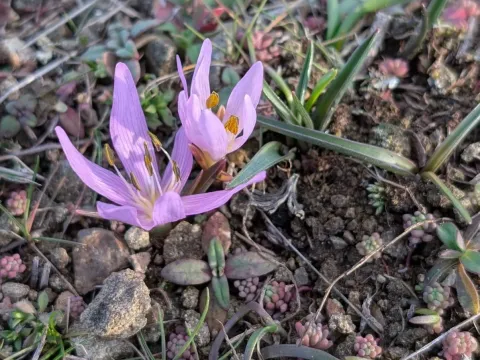
Colchicum trigynum
Colchicum trigynum
Colchicum trigynum is primarily propagated through the division of corms. This process should be undertaken during the plant's dormant summer phase, which occurs immediately after the foliage has withered and turned yellow.
What the section contains
Colchicum trigynum
The optimal time for planting corms in the open ground is late summer or early autumn. This early planting schedule ensures that the root system develops sufficiently before the ground temperatures drop significantly during the onset of winter.
Corms should be planted at a depth of approximately 10 to 15 centimeters. The spacing between individual plants should be at least 15 centimeters to allow for healthy growth and to prevent the spread of diseases in overcrowded patches.
Propagation by seed is possible but is typically reserved for research or specialized breeding, as it requires a multi-year germination process involving cold stratification. Patience is required, as the first true leaves may take several years to appear.
When handling the corms, it is important to avoid damaging the basal plate, as wounds are entry points for soil-borne pathogens. Using a clean, well-draining soil mix during the initial planting stages significantly enhances survival rates.
Colchicum trigynum belongs to the Colchicaceae family and is recognized as a distinctive mountain ephemeroid. It thrives in environments that mimic its natural habitat, requiring clear, sunny locations that receive adequate exposure throughout the day.
Good soil drainage is the most critical requirement for this species. In soils that retain excessive moisture, corms are prone to rapid rotting, which can destroy an entire collection within a very short period of time.
The plant prefers neutral or slightly alkaline soil conditions. Amending heavier clay soils with grit, sand, or coarse organic matter is highly recommended to improve structure and allow for essential air circulation around the root zone.
This species is highly cold-hardy, having evolved in high-altitude environments. It is well-adapted to surviving harsh winters, provided that the soil is not waterlogged, as freezing wet soil can damage the dormant corms.
Watering should be consistent during the active growth phase but must be strictly withheld as the foliage dies back in summer. This dry period is essential for the plant to complete its reproductive cycle and store energy for the following season.
Slugs and snails are the most prominent pests for this species, often causing significant damage to emerging shoots. Integrated pest management, including physical barriers and environmentally friendly baits, is recommended for effective control.
Fusarium and other soil-borne fungi pose a constant threat, especially if the drainage is inadequate. Infected corms often show signs of softness and discoloration and must be removed and destroyed to prevent spreading.
Larvae of soil-dwelling beetles, such as the May beetle, can damage the corms by feeding on their base. Preventive soil treatment with biological insecticides can help keep populations of these pests under control during the planting season.
Botrytis, or gray mold, can occur if there is poor air circulation and high humidity around the plant foliage. Thinning out the patches and applying appropriate fungicides can mitigate the impact of this condition.
- Regular inspection of the planting site for early signs of decay.
- Maintenance of a weed-free environment to improve airflow.
- Careful management of soil moisture levels throughout the growing cycle.