
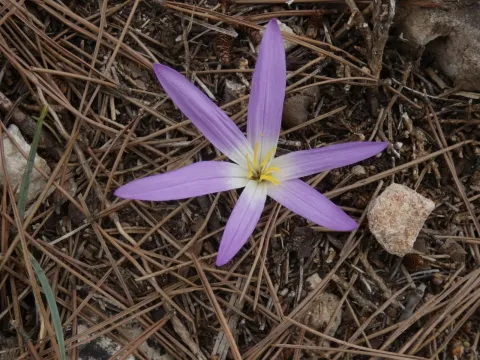
Colchicum filifolium
Colchicum filifolium
Colchicum filifolium is a perennial bulbous plant belonging to the Colchicaceae family. Native to the arid regions of Spain and Morocco, it is well-adapted to environments characterized by rocky soils and significant seasonal variations in precipitation.
What the section contains
Colchicum filifolium
The plant exhibits a specialized growth cycle, typical of Mediterranean bulbous geophytes. It requires distinct periods of warmth and drought during its summer dormancy to mature the bulb and prepare for the following autumn flowering cycle.
Site selection is crucial for successful cultivation. The plant thrives in full sun, which is necessary to maximize photosynthesis during its relatively short vegetative period. Shade results in weak growth and reduced flowering success.
Soil requirements focus on drainage. The species needs loose, gritty, or sandy soil that prevents water accumulation around the bulb. Heavy, clay-based soils are unsuitable and often lead to fatal bulb rot during the dormant phase.
Botanically, it is distinguished by its thread-like (filiform) leaves, from which the name is derived. The plant's small stature and unique timing make it a specialized interest for collectors of alpine and rock garden flora.
The optimal planting time for bulbs is late summer or early autumn, corresponding to the period when the plant enters its dormancy. Planting at this time ensures the roots begin to establish before the winter rains or cold weather arrive.
Bulbs should be planted at a depth of approximately 8–10 cm. Adequate depth protects the bulbs from extreme temperature fluctuations and stabilizes them within the soil structure to support the development of the shoot.
Seed propagation is a long-term process. Seeds should be sown immediately after harvest in a well-draining substrate. Growers should anticipate that seedlings may take several years to reach maturity and produce their first flowers.
When planting in clusters, maintain a spacing of at least 10–15 cm between individual bulbs. This promotes adequate airflow, which is essential to reduce the risk of humidity-related pathogens infecting the developing foliage.
Maintenance involves keeping the soil relatively dry during the summer months. Over-watering during dormancy is a common mistake that prevents the plant from completing its life cycle correctly.
Fungal pathogens are the primary concern for Colchicum filifolium. Conditions that promote prolonged soil moisture, such as excessive rain in summer or poor drainage, often trigger botrytis or fusarium wilt, which can destroy the bulbs.
Gastropods, particularly slugs and snails, pose a significant threat to emerging foliage. Regular monitoring and the implementation of physical barriers are recommended to protect the plants during their active growth phase in early spring.
Soil-borne insects, including bulb flies, can damage the internal structure of the bulb. Prophylactic treatment of the planting area and using healthy, pest-free bulbs are the best strategies for long-term management.
Implementing a crop rotation or periodic lifting of the bulbs is recommended. Digging up the bulbs every 3 to 4 years allows the gardener to inspect them for damage and prevents the buildup of soil-borne diseases.
If the local climate is excessively wet, growers should consider using raised beds or adding grit to the soil mix to improve drainage and minimize the risk of bacterial and fungal infections.