
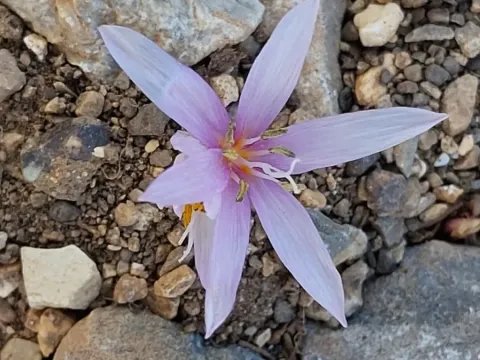
Cretan Colchicum
Colchicum cretense
Planting of the Cretan Colchicum is typically performed in late summer when the plant enters its biological dormancy phase. Bulbs should be planted in the soil during August or September to allow for proper rooting before the onset of cold weather.
What the section contains
Cretan Colchicum
The planting depth depends on the bulb size and generally ranges from 10 to 15 centimeters. It is crucial to maintain a distance of approximately 15–20 centimeters between plants to ensure adequate space for root system development.
Propagation by seed is less common because the plant takes a long time to reach its first flowering stage. Seeds are sown before winter in open ground or trays to undergo natural stratification under outdoor conditions.
For more efficient propagation, growers use the division of bulb clusters. This procedure is typically carried out once every 4–5 years after the foliage has completely withered and turned yellow.
The planting site should be clearly marked to avoid accidental damage to the bulbs during soil maintenance, especially during the period when there is no visible above-ground growth.
Cretan Colchicum belongs to the Colchicaceae family and thrives in open, sunny locations. The plant is light-loving, although it can tolerate partial shade during the hottest hours of the day.
The plant has moderate soil requirements. The ideal substrate consists of light, well-drained loams or sandy soils with a neutral to slightly alkaline pH balance.
Cretan Colchicum is highly sensitive to waterlogging. In heavy clay soils, it is essential to incorporate sand or gravel as a drainage layer to prevent bulb rot.
During the spring growth period, the plant requires consistent, moderate watering. However, once the summer dormancy begins, the soil must remain dry to prevent the bulbs from decaying.
As a species adapted to a Mediterranean climate, the plant prefers mild winters. In colder regions, surface mulching with organic material is necessary to protect the bulbs from deep freezing.
The primary threats to Cretan Colchicum are fungal diseases, particularly gray mold. The development of such infections is usually exacerbated by excessive soil moisture and poor air circulation.
Pests like slugs and snails are known to consume the succulent leaves during the spring. This activity weakens the bulb and reduces the intensity of the subsequent autumn bloom.
Wireworms can damage the basal plate of the bulbs, which often results in the wilting and eventual death of the plant. Thorough soil cultivation before planting is an effective preventative measure.
Rodents and moles can mechanically disturb the planting site and damage bulb clusters. Using protective wire mesh during the planting process is a recommended strategy to minimize these risks.
Infected plants should be removed and destroyed immediately to prevent the spread of diseases. Annual preventive fungicide treatments of the soil are also recommended for professional cultivation.
The economic use of the plant primarily involves the harvesting of medicinal raw materials, specifically those containing alkaloids such as colchicine. Harvesting must be timed precisely with the plant's phenological stages.
Bulbs are harvested after the completion of the vegetative cycle when the foliage has fully died back. This phase usually occurs in mid-to-late summer, when the plant is in a state of deep dormancy.
After excavation, the raw material must be cleaned of soil and dried at a strictly controlled, moderate temperature. Excessive heat can degrade the chemical compounds, rendering the material ineffective.
Seeds are gathered as they mature in the capsules during the spring. Harvesting should be done selectively to ensure maximum yield before the pods naturally disperse the seeds.
Storage of the collected material must be done in dry, well-ventilated areas. Due to the high toxicity of all plant parts, personal protective equipment is mandatory when handling the raw material.