
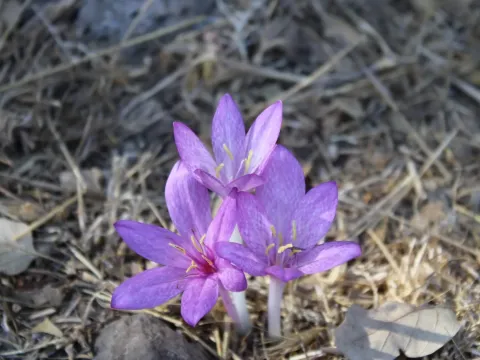
Feinbrun's Colchicum
Colchicum feinbruniae
Feinbrun's Colchicum (Colchicum feinbruniae) belongs to the Colchicaceae family and is native to the Middle East, specifically found in regions of Lebanon and Syria. This species is highly valued for its botanical uniqueness and delicate appearance.
What the section contains
Feinbrun's Colchicum
The plant requires well-drained, porous soil to thrive. Heavy soils that retain moisture are unsuitable as they promote bulb rot. Adding grit or sand to the planting hole is recommended to ensure proper drainage for the corms.
A location with full sun exposure is essential for the healthy development of this species. Bright light ensures that the plant completes its life cycle efficiently, allowing the corm to store sufficient energy for the next growing season.
Climatic conditions should mimic its natural environment: a temperate spring for foliage growth and a hot, dry summer for dormancy. Providing these seasonal fluctuations is the key to successful cultivation in home or commercial gardens.
Morphologically, Colchicum feinbruniae produces foliage in early spring, which eventually withers, followed by blooms in autumn. The corms are persistent and grow deeper into the soil over time, requiring stable conditions for perennial growth.
Fungal pathogens, particularly those causing bulb basal rot, represent the most significant threat. These diseases often emerge due to improper drainage and excessive humidity during the dormancy period of the corms.
Slugs and snails pose a constant risk to the spring foliage, which is soft and succulent. Integrated pest management, including physical barriers or safe baiting, is necessary to maintain the plant's health during the vegetative stage.
Aphids can infest the plant, causing stress and potentially transmitting viral pathogens. Early intervention with appropriate horticultural soaps or systemic insecticides is advised to prevent significant damage.
Root-knot nematodes can weaken the plants, leading to stunted growth and reduced flowering. Using certified disease-free corms and practicing soil hygiene are critical measures for prevention.
Viral infections manifest as mosaic patterns on the leaves and can lead to eventual decline. As there is no cure for such infections, affected plants should be promptly rogued from the planting site to protect the remaining collection.