
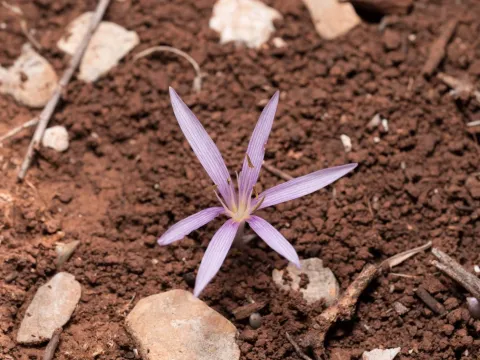
Colchicum pusillum
Colchicum pusillum
Colchicum pusillum belongs to the Colchicaceae family and acts as an ephemeral plant. The optimal time for planting the corms is late summer to early autumn, while the plant is in its natural dormancy phase.
What the section contains
Colchicum pusillum
Plant the corms at a depth of approximately 10 to 15 centimeters. This depth helps protect the root system from rapid temperature fluctuations during the transition between late autumn and winter.
Maintain a spacing of at least 15–20 centimeters between corms. This ensures that each plant has enough nutrients and space to develop its foliage during the following spring growth period.
It is essential to place the corms in well-prepared, loose soil. If the soil is heavy, add coarse sand or perlite to improve drainage and encourage successful root establishment.
Once planted, water the area slightly to settle the soil. Avoid heavy watering immediately, as the corms require a stable, moderately dry environment to transition into the growth cycle.
This species thrives in sunny, open locations with excellent drainage. It is highly sensitive to soil moisture levels and performs best in sites that dry out significantly during the summer months.
The ideal soil should be neutral to slightly alkaline, enriched with organic matter but not prone to compaction. Poorly drained soil will lead to the death of the bulb due to rot.
Maintenance involves minimal irrigation during the active spring foliage phase. In summer, the plant prefers a hot, dry period, which is critical for the maturity of the corms and successful future flowering.
The plant is hardy and adapts well to temperate climates. In colder regions, a thin layer of mulch can protect the soil surface, though excessive moisture in the mulch should be avoided.
Regular weeding is essential for this low-growing plant. Competing weeds can quickly overshadow its delicate growth, leading to reduced flowering in subsequent years.
Snails and slugs are the primary pests that damage the succulent foliage of the plant during the spring. Implementing barrier methods or bait traps can significantly reduce their impact on the garden.
Fungal diseases, particularly grey mould (Botrytis), are common when the plants are grown in damp, poorly ventilated areas. This pathogen quickly affects the corm tissue, leading to plant decay.
Wireworms can occasionally cause damage to the underground parts, potentially exposing the corm to secondary infections. Keeping the surrounding area clean of debris is an effective preventive measure.
- Regular checks for pest presence.
- Ensuring adequate soil drainage.
- Removing and destroying infected plant tissue immediately.
By selecting a well-drained site and ensuring the bulbs are not overcrowded, gardeners can effectively prevent most disease and pest issues associated with this species.