
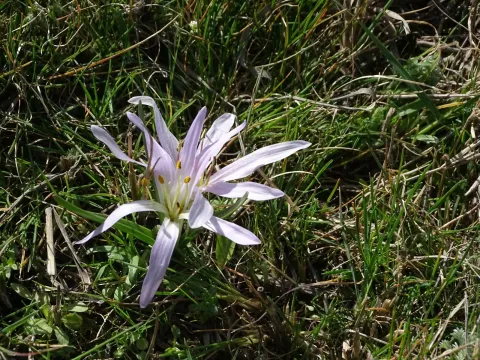
Colchicum soboliferum
Colchicum soboliferum
Colchicum soboliferum is a perennial bulbous plant belonging to the Colchicaceae family. Known as a spring ephemeral, this species follows a unique life cycle with intense growth and flowering early in the spring, followed by a summer dormancy period.
What the section contains
Colchicum soboliferum
This species thrives in open, sunny locations where it can access full sunlight during its short vegetation period. It is native to steppe zones and rocky habitats, making it well-adapted to environments with significant seasonal variations.
The plant requires well-drained, porous soils to survive. Sandy or light loamy soils are ideal, as they prevent water accumulation around the bulb, which is crucial for preventing rot during the dormant phase.
Regarding soil chemistry, a neutral or slightly alkaline pH is preferable. The plant does not require high levels of fertilization; over-fertilizing can lead to excessive foliage growth at the expense of bloom quality and bulb health.
Colchicum soboliferum is highly frost-hardy, capable of withstanding harsh continental winters. Its hardiness makes it a reliable choice for gardens in temperate regions where other more sensitive bulbous plants might fail.
Vegetative propagation via bulb offsets is the most common and reliable method for cultivating this plant. Offsets should be separated and replanted during the dormant phase, typically in late summer.
Planting depth should be adjusted according to the size of the bulb, generally ranging from 8 to 10 centimeters. Proper depth ensures the bulbs remain stable and protected from extreme surface temperature fluctuations.
Seed propagation is possible but slow. Seeds require a period of cold stratification to overcome dormancy. Germination is often uneven, and it may take several years for a seedling to reach the flowering stage.
When planting, it is essential to maintain proper spacing to ensure adequate airflow around the plant. Crowding can create microclimates that encourage moisture retention and increase the likelihood of fungal diseases.
Mulching the area with light, organic materials can help stabilize soil moisture levels and provide protection against erosion, although the mulch layer should not be so thick as to prevent spring shoots from emerging.
Slugs and snails are the primary pests that damage the delicate spring foliage of Colchicum soboliferum. Early spring monitoring and the use of physical barriers or targeted biological controls can effectively mitigate this damage.
Fungal pathogens such as Botrytis, also known as gray mold, pose a significant risk, especially in years with high spring rainfall. These pathogens can cause rapid degradation of foliage and bloom stalks.
Fusarium rot represents a more severe, persistent threat, specifically targeting the base of the bulbs. Once a bulb is infected, it typically cannot be saved, so removing and destroying affected bulbs is a critical management practice.
Cultural practices, such as ensuring high soil aeration and avoiding overhead irrigation during the flowering period, are the most effective ways to prevent disease outbreaks.
- Implement strict sanitation measures by removing plant debris in the autumn.
- Improve soil drainage before planting in heavy clay areas.
- Rotate planting sites if potential soil-borne pathogens are identified.