
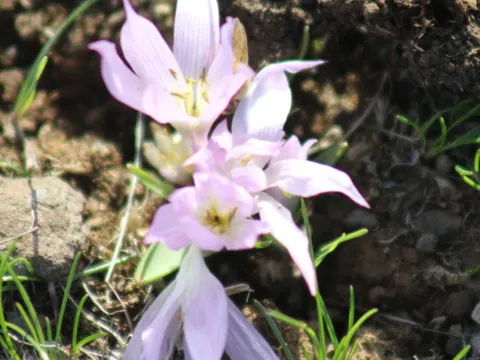
Colchicum szovitsii
Colchicum szovitsii
Colchicum szovitsii is a perennial bulbous plant belonging to the Colchicaceae family. Its life cycle is deeply linked to seasonal rhythms, meaning that bulb planting should take place exclusively in late summer, during the plant's natural dormancy period.
What the section contains
Colchicum szovitsii
August is considered the optimal time for planting in open ground. During this period, the bulbs begin to transition from dormancy, and it is essential to ensure they establish roots before the first frost arrives, allowing for a successful wintering.
When propagating by seed, sowing should be done immediately after harvest in late autumn directly into the ground. The seeds require stratification, and natural winter conditions effectively improve germination rates in the following spring.
Proper planting depth is crucial, typically ranging from two to three times the diameter of the bulb. Planting too shallow may expose the bulb to freezing, while planting too deep can significantly delay the emergence of flower stalks.
The chosen site should be permanent, as these plants do not tolerate frequent transplanting. It is best to select a location where the bulb clumps can remain undisturbed for 4–6 years to ensure healthy growth and flowering.
Originating from the mountainous regions of the Caucasus and Western Asia, this plant requires well-drained, light soil. It absolutely does not tolerate waterlogging, which quickly leads to the rotting of the bulb's basal plate.
The ideal substrate is a loose, nutrient-rich loam mixed with sand or gravel to ensure excellent drainage. A neutral to slightly alkaline soil pH is preferred to facilitate the uptake of essential nutrients for growth.
This culture is sun-loving, so selecting an open, well-lit area is necessary for intensive flowering. However, in hotter climates, light afternoon shade is acceptable to help preserve the foliage during the late stages of growth.
Watering should be moderate. The primary need for moisture occurs in the spring when the foliage rosette is actively developing. Once the foliage dies back into the summer dormant period, all irrigation should be strictly avoided.
The plant exhibits high cold tolerance, which is characteristic of its alpine origins. It does not require winter protection, although a thin layer of compost or organic mulch can be beneficial to maintain soil structure and prevent erosion.
The primary threats to this plant are slugs and snails, which can severely damage the tender spring shoots. To protect the plantings, it is recommended to use iron phosphate baits or physical barriers around the plant clusters.
In conditions of high soil moisture, the plant is susceptible to fungal diseases like gray mold and fusarium wilt. Symptoms include leaf spots and decaying bulb necks, which can lead to the rapid collapse of the entire plant.
The bulb fly is another typical pest. The larvae of this insect can completely consume the bulb's interior, so applying insecticides or performing prophylactic bulb treatments before planting is a common and effective practice.
Disease prevention relies on strict moisture control and avoiding overcrowding. Ensuring good air circulation around the plants significantly reduces the risk of rot and fungal development in the soil environment.
Any diseased specimens detected should be immediately removed along with the surrounding soil. As a preventive measure, annual disinfection of the bulbs in fungicide solutions prior to autumn planting is strongly advised.
Seed collection is performed after the capsules have fully matured, usually at the beginning of summer. The capsules are carefully cut as they begin to yellow and then dried in a well-ventilated area until they naturally split.
Bulb excavation for propagation should only be done after all foliage has completely yellowed and withered. This is a critical step, as removing leaves prematurely deprives the bulb of necessary energy reserves for the following season.
Once lifted from the ground, the bulb clusters should be cleaned of old scales and residual roots. Careful culling of any diseased or damaged bulbs is necessary to prevent the spread of infection to healthy stock during storage.
Storage should take place in a dry, cool, and dark area with temperatures maintained around 18–20 degrees Celsius. Proper air circulation is essential to prevent mold growth on the bulb scales during the resting phase.
Division of bulb clusters is best performed in late summer, just before planting. Storing divided bulbs in the open air for extended periods is not recommended, as they can quickly lose moisture and become desiccated.