
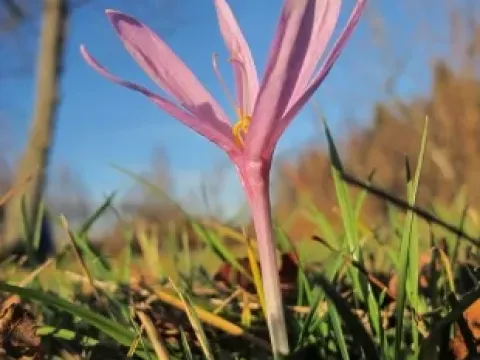
Colchicum nanum
Colchicum nanum
Colchicum nanum is a dwarf perennial plant belonging to the Colchicaceae family. Originating from the rocky slopes of the Balkans and Turkey, this species is highly valued in rock gardening for its compact habit and late-season blooming period.
What the section contains
Colchicum nanum
The plant requires full sun to light shade to thrive. It is adapted to mountainous environments where soil drainage is excellent. It is essential to ensure that the site has a sandy or gritty substrate to prevent water retention around the corms during the summer dormancy phase.
Optimal soil for Colchicum nanum should be slightly alkaline or neutral, fertile, and very well-drained. Heavy clay soils are generally unsuitable unless amended significantly with grit or coarse sand to facilitate water movement away from the bulb base.
Botanically, it is a low-growing plant, typically reaching no more than 10 cm in height. Its narrow, lanceolate leaves emerge in the spring, while the delicate, cup-shaped flowers appear in late summer or autumn, often before the foliage of the current season has fully matured.
The primary use of this species is ornamental. It is perfect for alpine gardens, scree beds, or as a foreground plant in borders. Because of its small size, it does not compete aggressively with other plants, making it a reliable companion for slow-growing ground covers.
The primary horticultural challenge for this species is excessive moisture. Root rot and corm decay are common if the soil remains wet during the plant's dormant period. Strategic placement on slopes or in raised beds is highly recommended.
Slugs and snails are the most prominent pests, particularly during the spring when the foliage is soft and succulent. Integrated pest management, including the use of physical barriers or targeted baiting, is necessary to protect the young leaves.
Fungal pathogens such as Botrytis can affect the flowers and foliage under high humidity and poor air circulation. Thinning out overcrowded clumps and ensuring that the planting area is well-ventilated will significantly reduce the likelihood of infections.
Gardeners should always wear gloves when handling Colchicum nanum. The corms and leaves contain colchicine, a toxic alkaloid that can cause severe skin irritation and is dangerous if ingested by humans or pets.
Viral infections can also occur, often spread by aphids feeding on neighboring plants. Maintaining a clean garden environment and monitoring for aphid infestations is crucial to preserving the health and longevity of the corms over many years.