
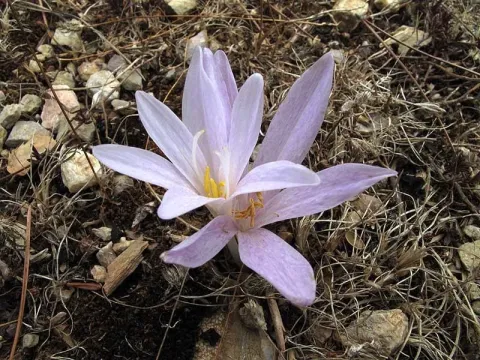
Colchicum lingulatum
Colchicum lingulatum
Colchicum lingulatum is a perennial cormous plant belonging to the Colchicaceae family. Native to the Eastern Mediterranean, particularly regions in Greece and Turkey, this species is highly valued for its distinct seasonal development cycle.
What the section contains
Colchicum lingulatum
In agricultural practice, the most common method of propagation is vegetative division of corm clusters. The corms should be lifted and divided during their dormant summer period, typically from late July to August, to ensure they are ready for autumn flowering.
Propagation by seeds is possible but requires significant patience, as the seedlings take several years to reach maturity and produce their first blooms. Seeds are sown immediately after harvest in a well-draining substrate to allow for natural cold stratification.
The optimal planting depth for the corms is approximately 10 to 15 centimeters. Ensuring proper spacing of about 15–20 centimeters between plants is essential to promote healthy growth and adequate aeration of the soil surface.
The plant exhibits a unique habit where the flowers emerge in the autumn directly from the ground without any leaves, followed by a separate phase of lush leaf growth in the spring. This characteristic must be accommodated when planning ornamental layouts.
This species thrives in well-drained, fertile soil, ideally of a loamy or sandy composition. Good drainage is paramount, as waterlogged conditions during the dormancy phase will inevitably lead to corm rot and plant death.
Colchicum lingulatum prefers full sun to light shade. Abundant sunlight during the spring leaf growth period is critical, as this is when the plant builds up the energy reserves necessary for autumn blooming.
The plant is relatively drought-tolerant once established, owing to its native Mediterranean habitat. However, consistent moisture during the active spring growing season significantly enhances the overall vitality of the corm.
Regarding climate, the plant requires a distinct cooling period during winter to trigger proper flowering. In regions with harsh, freezing winters, a layer of mulch is recommended to protect the corms from deep soil frost.
Minimal fertilization is required; a balanced, low-nitrogen liquid fertilizer applied once in early spring is generally sufficient. Excessive nitrogen should be avoided to prevent weak foliage growth and increased susceptibility to fungal diseases.
Slugs and snails are the most prominent pests, often causing significant damage to the lush spring foliage. Implementing physical barriers or organic baits is an effective strategy for protecting the plants during the early season.
Fungal infections, such as grey mold or various basal rots, represent the most serious threat to the corms. Prevention involves ensuring the planting site has excellent drainage and avoiding deep planting in heavy soils.
Due to the presence of colchicine, a highly toxic alkaloid, the plant is naturally resistant to most mammalian herbivores and many soil-dwelling insects, which is a major advantage for outdoor cultivation.
Viral infections can sometimes occur, typically characterized by mosaic patterns on the leaves. As these diseases are spread by aphids, controlling aphid populations is an essential part of the plant health management program.
Good agricultural hygiene, including the periodic division of corm clumps every 3 to 4 years, helps maintain plant vigor and limits the spread of localized pathogens, ensuring a long-lived and productive planting.