
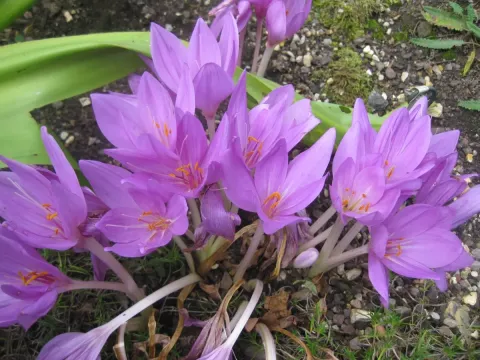
Colchicum hybrids
Colchicum hybrids
The planting of Colchicum hybrid corms should be performed strictly during the plant's dormant period, which typically occurs in late summer, specifically from late July to August.
What the section contains
Colchicum hybrids
Timely planting is crucial to allow the corm to establish a robust root system before the onset of the autumn flowering season, which is characteristic for these hybrids.
The planting depth is determined by the size of the corm: large corms are placed 15–20 cm deep, while smaller ones require a depth of 8–10 cm with 15–25 cm spacing.
Applying a layer of mulch after planting helps maintain soil moisture levels and protects the developing roots from temperature fluctuations during the transition to autumn.
Vegetative propagation via corm division is the standard practice, as seeds of hybrids are difficult to germinate and rarely yield plants identical to the parent.
Colchicum hybrids are members of the Colchicaceae family, widely appreciated in horticulture for their unique lifecycle and dramatic late-season flowering habits.
These plants thrive in sunny or semi-shaded locations with well-drained, fertile, and nutrient-rich soil that ensures healthy development of both leaves and flowers.
Effective drainage is essential; waterlogged soil leads to the rapid decay of corms, so heavy or clay-based soils should be amended with sand or organic matter.
The soil pH should ideally remain within the neutral to slightly acidic range to support optimal nutrient uptake and long-term vitality of the bulbous rootstock.
Consistent care during the spring leaf-growth phase, including moderate fertilization, is necessary to build energy reserves within the corm for the next flowering cycle.
Slugs and snails represent the primary pest threat to Colchicum hybrids, often feeding on the lush foliage during the spring and causing cosmetic and physiological damage.
Fungal infections, particularly Fusarium rot and grey mold, are the main pathological threats that arise primarily due to excessive moisture and poor soil aeration.
Preventative measures include regular spacing to improve airflow and periodic inspection of stored corms to ensure no signs of rot are present before replanting.
While the plants contain high levels of the toxin colchicine, which protects them from many mammals, they remain susceptible to soil-borne pathogens and moisture-related decay.
Integrated pest management, including the use of targeted molluscicides and biological fungicides, remains the most effective strategy for maintaining a healthy planting.