
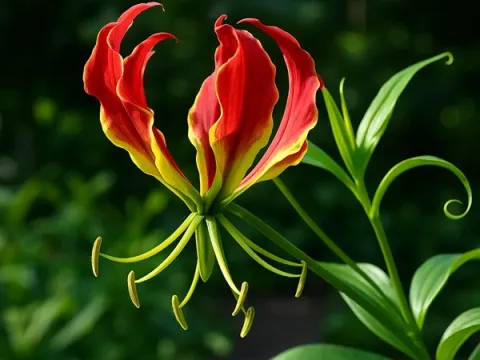
Gloriosa hybrids
Gloriosa hybrids
Planting Gloriosa hybrids is typically performed in the spring when soil temperatures reach at least 20 degrees Celsius. In greenhouse conditions, the tubers are planted from March through May to stagger the blooming schedule.
What the section contains
Gloriosa hybrids
Before planting, tubers should be treated with a fungicide to prevent rot, as they are highly susceptible to pathogens when transitioning from dormancy. The tubers are laid horizontally in the soil to ensure the growth tip is not damaged.
The planting depth should be approximately 5–10 centimeters depending on the size of the tuber. It is essential to use a loose, well-draining substrate to allow the emerging shoots to penetrate the soil surface easily.
For commercial production, spacing is crucial. Maintaining a distance of 15–20 centimeters between plants ensures adequate air circulation and light penetration, which is vital for developing healthy, high-quality stems.
Propagation is primarily vegetative by dividing existing tubers. Each segment must have at least one viable growth point to ensure proper development in the upcoming season.
Gloriosa, a member of the Colchicaceae family, is a climbing plant that requires high light intensity to thrive and produce its signature spectacular blooms. It is native to tropical regions of Africa and Asia.
Optimal growth occurs at temperatures between 22 and 26 degrees Celsius. Exposure to temperatures below 15 degrees Celsius can cause severe physiological stress and hinder the plant's metabolic functions.
The soil must be nutrient-rich, slightly acidic to neutral, and possess excellent drainage properties. A mixture of peat, loam, and sand is often recommended to create the ideal environment for root system development.
Regular irrigation is necessary during the active growth phase, but the soil must never be waterlogged. Overwatering is the primary cause of tuber decay and is a common failure point for novice growers.
As a climbing vine, Gloriosa requires structural support. Trellises, nets, or stakes are necessary to accommodate the plant's growth habit, as it uses leaf-tip tendrils to climb and secure its stems.
Common pests affecting Gloriosa hybrids include spider mites and aphids. These insects feed on the sap of young tissues, often causing leaves to yellow and distort, and buds to drop before opening.
Fungal diseases, specifically Fusarium wilt and root rot, represent significant threats. These pathogens thrive in damp, stagnant environments and can destroy the root system within a few days.
Proactive pest management involves regular inspections and the application of systemic insecticides or miticides when necessary. Hygiene is paramount to prevent the spread of diseases within the greenhouse.
Good ventilation is the best natural defense against mildew and fungal pathogens. By maintaining proper airflow, growers can significantly reduce the moisture levels that promote fungal outbreaks.
If viral symptoms appear, such as mosaic patterns on the foliage, the infected plant must be removed and destroyed immediately to prevent the spread of the virus throughout the entire crop.
The harvest of cut flowers should occur when the buds have fully colored and are just beginning to unfurl. This stage ensures the best vase life and aesthetic appeal for the consumer market.
At the end of the blooming season, irrigation should be gradually reduced to induce dormancy. The foliage will yellow and eventually die back, signaling that the plant is storing energy for the next cycle.
Tubers are lifted carefully once the stems are completely dry. They should be cleaned of soil debris, inspected for health, and stored in a cool, dry, and well-ventilated area until the next planting season.
During the storage period, temperatures should be kept between 12 and 15 degrees Celsius. Excessive humidity or high temperatures during storage can cause premature sprouting or fungal degradation.
Post-harvest logistics for cut flowers require careful handling and controlled temperatures to prevent mechanical damage and dehydration of the fragile, recurved petals during transit.