
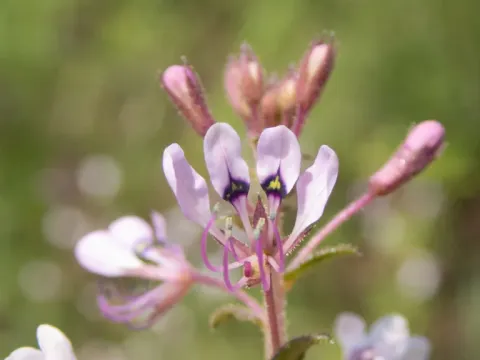
Cleome monophylla
Cleome monophylla
Cleome monophylla is a heat-loving crop; therefore, sowing must be conducted only after the soil has warmed up to at least 15 degrees Celsius. The optimal window for fieldwork usually falls in late spring, once the risk of late frosts has completely subsided.
What the section contains
Cleome monophylla
Seeds require rigorous pre-sowing preparation, including calibration and seed treatment to prevent initial fungal infections. Planting depth typically ranges from 2 to 3 centimeters, depending on the soil structure and existing moisture levels in the topsoil horizon.
To ensure uniform emergence, it is essential to maintain optimal soil moisture during the first two weeks post-sowing. The density of planting should be moderate, allowing each plant sufficient space for the development of a robust root system and significant vegetative mass.
In regions with shorter growing seasons, starting plants via seedlings in protected environments is highly recommended. Transplanting hardened seedlings to the field is performed when they reach 30–40 days of age, significantly boosting overall crop productivity.
Crop rotation is a mandatory practice for successful Cleome cultivation, as the species is sensitive to soil-borne pathogens that accumulate under continuous cropping. It is recommended to return the crop to the same field no sooner than every three to four years.
Belonging to the Cleomaceae family, this plant is an herbaceous species exhibiting high adaptability to arid tropical and subtropical environments. Full growth requires high-intensity sunlight and stable temperature ranges between 22 and 30 degrees Celsius.
The crop prefers light, well-drained sandy or sandy-loam soils with a neutral to slightly acidic pH. Avoiding sites with high water tables is crucial, as waterlogging in the root zone leads to rapid plant mortality and poor growth performance.
While the plant shows strong heat tolerance, periodic irrigation during prolonged droughts is necessary to maintain efficient photosynthesis. The application of mineral fertilizers, specifically phosphorus and potassium, significantly enhances flowering and seed yield.
Agronomic management includes regular weed control during the early stages of vegetation, as the crop grows slowly in the first weeks. Inter-row cultivation helps prevent soil compaction and improves the aeration of the root system.
Biologically, Cleome monophylla is defined by its single leaflet structure, a key taxonomic marker. The plant is capable of enduring short periods of moisture deficit due to its deep-reaching taproot system, which allows it to tap into deeper soil layers.
The economic value of Cleome monophylla is primarily focused on its seed production, which yields oil rich in essential fatty acids, and the use of its vegetative mass in traditional medicine. In various African nations, young leaves are consumed as a leafy vegetable after thermal processing.
Seed yield is directly proportional to the level of agronomic management and timely protection of insect pollinators, as the species is entomophilous. Under favorable conditions, average seed yields can be substantial, comparable to other minor oilseed crops.
Plant biomass is also utilized in the production of bioactive compounds, attributed to the presence of specific secondary metabolites. Residues remaining after the extraction of useful substances can be effectively composted for use as organic fertilizer.
The quality of the harvest is dictated by the timing of collection; early harvest leads to immature seeds, while delays can cause natural shattering. The optimal stage is when pods turn brown and seed moisture drops to approximately 12–14 percent.
Currently, breeding programs are actively focused on improving morphological traits, such as shattering resistance in pods and increased seed oil content, which will likely expand the crop's potential in large-scale industrial manufacturing.
Cleome monophylla is susceptible to various fungal diseases, most notably root rot and powdery mildew. Prevention strategies include maintaining optimal plant spacing to avoid overcrowding and preventing excess humidity in the root zone.
The primary insect threats include aphids, whiteflies, and spider mites, which feed on the sap of young shoots. High pest populations can lead to severe leaf deformation and a significant decline in the overall vigor of the crop.
Pest management requires integrated protection methods, combining contact and systemic insecticides with the encouragement of natural predators. Regular field monitoring is essential for the early detection and management of pest outbreaks.
In the event of viral infections transmitted by sucking pests, affected plants must be immediately rogued and destroyed off-site. This measure is critical to prevent the spread of the virus throughout the production field.
Chemical control must be carefully scheduled to account for the activity periods of beneficial pollinators, as the plant depends on them for fertilization. Selection of pesticides should favor eco-friendly options with minimal impact on non-target species.
Harvesting Cleome monophylla requires great care due to the tendency of seeds to shatter as pods fully mature. In commercial systems, a two-phase harvest method involving pre-cutting into windrows or the use of desiccation is often employed to synchronize ripening.
For small-scale production, harvesting is conducted manually by cutting the inflorescences at the wax-ripeness stage of the seeds. Harvested material is then cured under covers in dry, well-ventilated areas, away from direct sunlight to preserve quality.
Post-threshing seed cleaning is carried out using specialized machinery to calibrate by weight and size. Rapid drying to a safe moisture level is vital to prevent spoilage and fungal growth during the storage phase.
Post-harvest soil management includes deep plowing or disking to incorporate crop residues, facilitating rapid decomposition and reducing the pathogen load in the field. This practice creates a clean and healthy environment for the next rotation cycle.
Seed storage should occur in breathable bags or sealed containers under stable, cool, and dry conditions. Routine checks of storage conditions help ensure the maintenance of high seed viability until the start of the next planting season.