
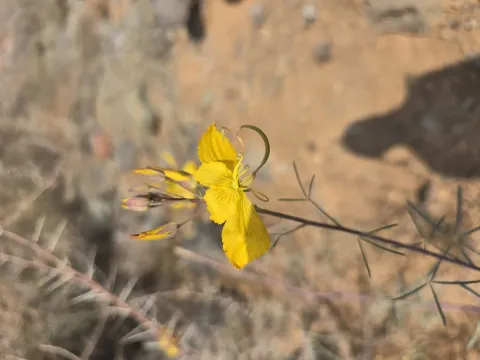
Cleome paradoxa
Cleome paradoxa
Cleome paradoxa is a distinct species belonging to the Capparaceae family, naturally occurring in the arid environments of Africa and the Arabian Peninsula. Its evolution has equipped it with exceptional traits for surviving in water-scarce regions.
What the section contains
Cleome paradoxa
Botanically, the plant is characterized by its palmately compound leaves and structurally asymmetrical flowers, which set it apart from other members of the genus. The plants typically develop robust, erect stems capable of withstanding harsh environmental conditions.
Optimal growth requires high levels of solar radiation and well-draining soil structures, such as sandy or rocky substrates. It is strictly sensitive to waterlogging, as the root system requires excellent aeration to prevent rot and ensure nutrient absorption.
Temperature management is crucial, as this species thrives in heat, with ideal growth occurring between +22 and +30 degrees Celsius. Exposure to frost or prolonged cold periods will inevitably lead to plant death, limiting its outdoor range to tropical or summer-seasonal cycles.
The plant has significant potential in arid-land landscaping and xeriscaping. Its ability to maintain physiological stability under moisture stress makes it a subject of interest for sustainable agricultural projects in dry regions.
The most critical threat to Cleome paradoxa is high soil moisture, which invariably leads to root decay and susceptibility to fungal pathogens. Maintaining an efficient drainage system is the most important agronomic measure for this species.
Spider mites are the most common pest, especially in hot and dry climates where the species naturally thrives. They thrive on the undersides of the leaves, where they cause chlorosis and eventually lead to the necrosis of leaf tissues if left untreated.
Aphids can also pose a problem, primarily targeting the soft tissues of new shoots and flower buds. Infestations lead to stunted growth and the potential transmission of viral diseases, which can significantly reduce the overall vitality of the crop.
Powdery mildew is a common fungal risk associated with poor airflow and fluctuating humidity levels. Adequate spacing between plants is recommended to facilitate proper ventilation and reduce the risk of spreading fungal spores.
Integrated pest management, including regular monitoring and the use of targeted biological controls, is essential for maintaining a healthy crop. Proactive management ensures that the plant's natural resilience is not compromised by avoidable biotic stressors.