
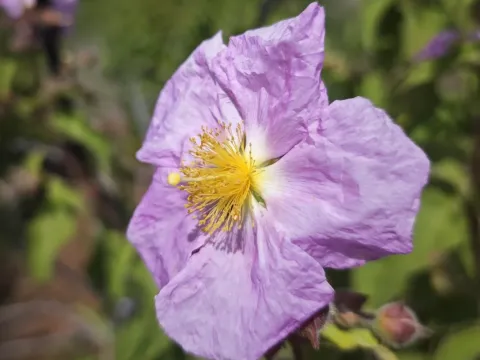
Cistus symphytifolius
Cistus symphytifolius
Propagation of Cistus symphytifolius is typically achieved through seeds sown in spring. Because the seeds have a hard seed coat, they require scarification or a brief soaking in warm water to improve germination rates, which generally occurs at temperatures between 18 and 20 degrees Celsius.
What the section contains
Cistus symphytifolius
For best results, use a well-draining substrate composed of peat, perlite, and coarse sand. Maintaining a consistent but light moisture level is crucial; however, avoid waterlogging the soil, as young seedlings are highly susceptible to "damping off" and root rot pathogens.
Vegetative propagation via semi-ripe cuttings in late summer is a preferred commercial method. Cuttings should be approximately 10–15 cm long and treated with a rooting hormone before being placed in a humid, shaded environment until roots develop.
Once rooted, seedlings or cuttings should be transplanted into individual pots. It is essential to ensure that the container size matches the root mass to prevent excess soil moisture from accumulating around the root system, which can cause decay.
Acclimatizing the plants to outdoor conditions should be a gradual process. Once established, the shrub becomes quite resilient, but young plants must be protected from extreme cold and drying winds during their first year of growth.
Cistus symphytifolius requires a full-sun exposure to thrive and produce its characteristic flowers. Insufficient sunlight will lead to spindly growth and a significant reduction in the plant's natural resinous oil production.
The soil must be exceptionally well-draining, ideally rocky or sandy with a slightly acidic to neutral pH. This species is naturally adapted to nutrient-poor substrates, so adding rich fertilizers is generally unnecessary and can be detrimental to the plant's health.
Climate requirements reflect its origin in the Canary Islands. It thrives in Mediterranean-type climates with mild, frost-free winters. In colder regions, it must be grown in containers and moved indoors or into a greenhouse before the first autumn frost.
Watering should be deep but infrequent. The plant possesses remarkable drought tolerance once established, making it suitable for low-maintenance landscapes. During winter months, especially for container-grown plants, irrigation should be kept to a bare minimum.
Pruning is essential for maintaining the shape of the shrub. After the flowering season, removing spent blooms and lightly trimming back the foliage encourages dense, bushier growth and prevents the plant from becoming woody and sparse at the base.
The most serious threat to Cistus symphytifolius is fungal infection, particularly root rot (Phytophthora spp.), which occurs when the soil remains too damp for too long. Improving drainage and ensuring air movement are the primary defenses against this risk.
Powdery mildew can infect the foliage during humid periods with stagnant air. Management involves applying sulfur-based fungicides and ensuring the plant is located in an area with excellent airflow to prevent moisture buildup on the leaves.
Pests such as aphids and spider mites may occasionally infest the plants, particularly when grown under cover or in greenhouse conditions. Early detection and the use of insecticidal soaps or neem oil are effective ways to manage these populations without damaging the plant.
Cistus species are also occasionally susceptible to Verticillium wilt. Once the fungus enters the vascular system, there is no cure, so the affected plant must be removed and the surrounding soil treated to prevent further spread of the spores.
To ensure long-term health, always prioritize hygiene in the growing area. Remove fallen debris, avoid overhead irrigation that wets the foliage, and monitor the plant regularly for any signs of yellowing or unusual stunted growth.