
Cistus verguinii
Cistus verguinii
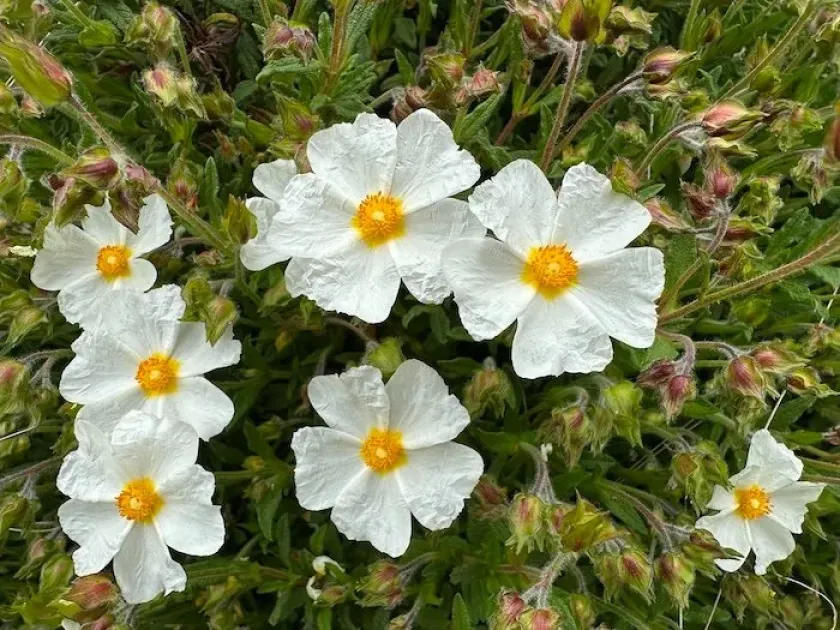
Description
Sowing dates
Sowing Cistus verguinii seeds in nurseries or open ground is usually scheduled for the spring period when the soil warms up to 15-18 degrees Celsius.
The seeds of the plant have a dense seed coat, so professionals recommend performing a stratification procedure for 30-40 days at low positive temperatures to increase germination rates.
When transplanting seedlings into the soil, it is important to follow an optimal planting scheme that allows the shrub to develop fully, maintaining access to light and nutrients.
Surface sowing is the preferred method, as small seeds require exposure to sunlight for successful germination and the development of the primary root system.
In regions with a mild climate, late autumn sowing is possible, which allows the seeds to undergo natural hardening, ensuring earlier and more uniform emergence with the arrival of spring warmth.
Growing requirements
Cistus verguinii is a light-loving plant belonging to the Cistaceae family, which naturally grows on the open, dry slopes of the Mediterranean region.
The crop has specific requirements for soil quality: it must be well-drained, sandy or stony, with a neutral or slightly acidic pH level.
An important development factor for the plant is protection from strong cold winds and standing water at the roots, which is fatal for this Mediterranean species.
The plant possesses exceptional drought resistance; however, during the active growth season, young seedlings need moderate, regular irrigation to form a strong bush.
- Abundant sunlight at least 8 hours per day.
- Absence of high groundwater levels in the cultivation area.
- Temperature range within 20-25 degrees Celsius for active flowering.
Main diseases and pests
Among the most dangerous pests of Cistus are various species of aphids and spider mites that attack young leaves during dry periods of the year.
With waterlogged soil, the plant is prone to fungal infections such as root rot and powdery mildew, requiring immediate treatment with fungicides.
Improper agronomy, associated with excessive nitrogen fertilizer application, triggers disease development, reducing the essential oil productivity of the plantations.
Monitoring of the crop condition should be carried out weekly, especially during periods of high air humidity that promote the spread of pathogens.
Biological pest control using entomophages is the most preferred method, allowing for the preservation of the ecological purity of the resulting raw material.
Harvesting
Economic use of Cistus verguinii focuses on the harvesting of young shoots and leaves, which are rich in resins and valuable essential oils.
Harvesting of plant material is conducted during the peak flowering period when the concentration of aromatic compounds in the plant tissues reaches its maximum.
To preserve the quality of the essential oil, the harvested parts of the plant must be dried in the shade under a canopy, avoiding direct ultraviolet exposure.
Mechanized harvesting on plantations is possible using special harvesters adjusted for gentle pruning to avoid damaging the woody stems of the shrub.
After initial drying, the raw material is sent for distillation, where, in industrial conditions, labdanum—a specific resin used in perfumery—is extracted.