
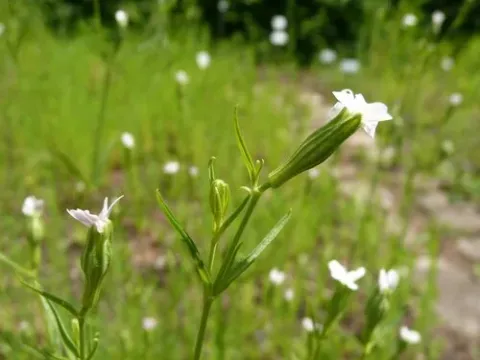
Flax campion
Silene linicola
Flax campion is a weed species historically adapted to the growth cycle of flax. Its seeds are often introduced into the soil profile alongside flax seeds, as the maturation of the weed is synchronized with the main crop.
What the section contains
Flax campion
Germination typically occurs in early spring, once the soil temperature reaches an adequate level for plant development. The seedlings are capable of rapid growth, allowing them to compete effectively with young flax shoots for resources.
Timing is critical for the weed's success. If the sowing of flax is delayed, the competitive advantage of the flax campion is reduced due to the shift in climatic conditions and available sunlight.
Successful management of the plant involves strict control of the seed cleaning process. Since the seeds are similar in size and weight to flax seeds, specialized mechanical separation is required to ensure field purity.
The germination period usually spans from April to May, coinciding with the peak of spring agricultural activity. Consistent temperatures of 12-15 degrees Celsius are optimal for the emergence of the crop's parasitic flora.
The plant thrives in fertile, well-drained loamy soils. It requires sufficient nutrient availability to support its vegetative growth, which is why it often appears in well-fertilized agricultural fields.
Moisture requirements are high during the vegetative phase. The plant prefers regions with moderate rainfall, as it lacks deep root systems capable of extracting water from subsoil levels during prolonged droughts.
Light intensity is a significant factor for the flax campion. While it can survive in various light conditions, its peak physiological activity and flower production occur in full sunlight, making it highly dependent on canopy density.
The ideal soil pH for this species ranges from slightly acidic to neutral. Extremes in soil chemistry, such as high salinity or extreme alkalinity, inhibit the germination of its seeds and the development of the plant.
Agricultural management should focus on maintaining a balanced rotation system. By avoiding the continuous cultivation of susceptible crops like flax on the same field, the population of this weed can be kept under control.
Fungal diseases such as powdery mildew represent the primary biological threat to the health of the flax campion. In damp environments, these fungi can rapidly spread across a population, reducing overall plant vigor.
Various insect pests, including aphids and leaf-eating beetles, often infest the foliage during the summer months. These insects act as natural controllers, although they rarely eradicate the infestation entirely.
Root pathogens are particularly problematic in low-lying, poorly drained areas of the field. These infections often result from excessive soil saturation and can compromise the integrity of the root system.
- Powdery mildew infections.
- Root and stem rot diseases.
- Aphid infestations.
- Seed-eating insects.
Effective management against these threats is usually integrated into the broader crop protection strategy for flax. Regular field scouting and targeted herbicide applications are necessary to minimize yield losses from weed competition.