
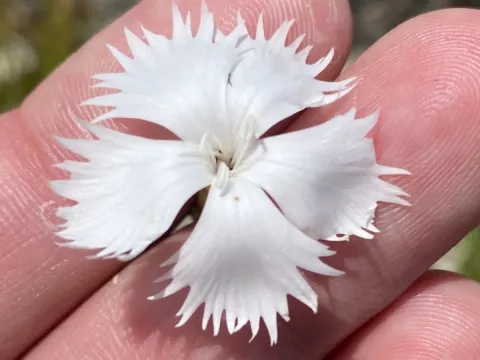
Fragrant carnation
Dianthus fragrans
Fragrant carnation (Dianthus fragrans) belongs to the Caryophyllaceae family. In commercial flower production, seeds are sown indoors in late winter or early spring, approximately 8 to 10 weeks before the last expected frost date.
What the section contains
Fragrant carnation
Seeds require a consistent temperature of 18–20°C (64–68°F) for successful germination. Sowing should be done in a light, well-draining substrate with a neutral pH, kept moderately moist until seedlings emerge.
Pricking out the seedlings occurs after the development of two pairs of true leaves. High light intensity is crucial during the early stages to prevent leggy stems and ensure the production of high-quality planting material.
Transplanting into open ground is carried out when the soil warms to 10–12°C (50–54°F), typically in May. It is essential to maintain proper spacing to ensure adequate air circulation and prevent fungal diseases.
While direct seeding is possible in warmer climates, the transplant method remains the standard for commercial fields to achieve uniform plant density and controlled growth across the entire production area.
The crop has high light requirements; fragrant carnations thrive in open, sunny locations that are protected from strong winds to prevent stem lodging and ensure continuous blooming.
The soil must be well-structured, fertile, and permeable. Loamy or sandy-loam soils enriched with organic matter are considered ideal, provided there is no risk of waterlogging, which the plant cannot tolerate.
Carnations perform poorly in acidic conditions. Therefore, soil testing is recommended, and liming should be applied if necessary to bring the pH level to a neutral range of 6.5–7.5.
Regular but moderate irrigation is critical during the growing season. Excessive moisture, especially in poorly ventilated environments, leads to root rot and other moisture-related pathogens.
To enhance aesthetic value and productivity, apply balanced NPK fertilizers with an emphasis on potassium and phosphorus during the budding phase to stimulate vibrant flowering and strong flower stalks.
The commercial use of fragrant carnation is focused on high-quality cut flowers and landscaping. Standard planting density for these crops typically ranges between 30 and 40 plants per square meter.
Varieties known for their scent are highly valued in the perfume industry and professional floristry. A healthy plant can maintain a productive flowering period of 4 to 6 weeks under optimal conditions.
Consistent removal of spent blossoms promotes the development of new buds, significantly extending the harvest window for marketable flowers throughout the growing season.
Yield quality is determined by the length and strength of the flower stalks and the degree of bud opening, which requires precise climate control and timely fertilization throughout the development phases.
When grown for essential oil extraction, the yield of biomass and petals is highly dependent on solar radiation levels, which directly influence the synthesis of aromatic compounds in the flowers.
Common diseases include Fusarium wilt, which manifests as leaf yellowing and stem dieback, and rust, which affects the foliage and significantly reduces the marketability of the crop.
Spider mites are a prevalent pest, thriving in dry and warm conditions. Their presence requires immediate monitoring and the application of acaricides to prevent extensive damage to the leaves.
Thrips and aphids often attack flower buds, draining cell sap and ruining the aesthetic value of the stems, making regular preventive insecticide treatments a standard practice in commercial production.
Nematodes can pose a severe threat to the root system, emphasizing the importance of crop rotation and the use of sterilized soil or substrates when preparing seedlings for planting.
Integrated pest management involves the removal of infected plants, optimized watering schedules, and ensuring adequate plant spacing to minimize the microclimate conditions that favor infection spread.
Harvesting should be performed in the early morning when plants are fully turgid, which ensures longer vase life and better resilience during handling and transportation to the market.
For commercial cut flower production, stems are harvested when the bud is fully colored but not yet fully open to maximize the longevity of the flowers for the end consumer.
Tools used for harvesting must be sharp and sanitized to avoid the transmission of pathogens between plants in the production field, which is vital for maintaining healthy crop blocks.
Immediately after harvest, the flowers should be placed in cool storage or clean water buckets. Exposure to direct sunlight after cutting significantly degrades the quality of the stems.
If harvesting for pharmaceutical or perfume industry raw materials, flowers are gathered at the peak of their bloom to ensure the highest possible concentration of essential oils in the petals.