
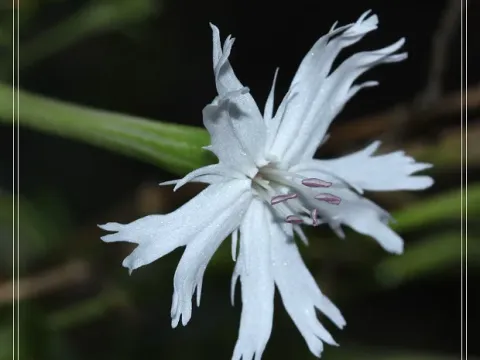
Fortune's Catchfly
Silene fortunei
Fortune's Catchfly (Silene fortunei) is typically sown in early spring, after the danger of night frosts has passed, or sown in autumn in regions with mild winters. When using a nursery method, seeds are sown in containers in March to ensure early flowering in the current season.
What the section contains
Fortune's Catchfly
The optimal temperature for seed germination ranges from 18 to 20 degrees Celsius. The planting depth should be minimal, as the seeds are small and require a certain amount of light to successfully germinate and develop.
Pricking out the seedlings is carried out at the two true leaf stage. These plants handle transplantation well, provided the root ball remains intact during the transfer to permanent garden beds.
The planting distance between plants in open ground should be approximately 25–30 centimeters. This provides necessary ventilation and prevents the spread of fungal diseases through the foliage.
Direct sowing into the ground is possible in April or May. The soil must be well-warmed and pre-cleared of weeds, which could potentially suppress the young sprouts during the initial stages of development.
The plant belongs to the Caryophyllaceae family and is native to East Asia, including parts of China. It prefers sunny locations protected from strong winds, where flowering will be at its most abundant and vibrant.
Fortune's Catchfly is not demanding regarding soil fertility, but it thrives best in light, well-drained soils with a neutral or slightly alkaline pH. Water stagnation in the root zone is fatal for this species.
Irrigation should be moderate and regular during the active growth and flowering phases. During drought periods, the need for moisture increases, but waterlogging is unacceptable as it leads to root system rot.
The crop is frost-hardy, although in severe snowless winters, light covering with mulch or spruce branches is recommended. This prevents the basal rosette of leaves from freezing in harsh winter conditions.
Mineral fertilizers should be applied twice per season: at the beginning of growth and just before the onset of flowering. Use complex formulas containing phosphorus and potassium to maintain aesthetic appeal.
The main threats to the plant include fungal diseases such as leaf spot and root rot. Excessive air humidity and poor air circulation in plantings contribute significantly to the development of these infections.
Among pests, aphids and spider mites represent the greatest danger, as they feed on the sap of young leaves and flower buds. Regular inspection of the plants allows for the early detection of pest colonies.
Upon discovering the first signs of fungal infestation, systemic fungicides should be applied. Prevention involves timely weeding and the removal of damaged parts of the plants to maintain overall hygiene.
To control insect pests, broad-spectrum insecticides or biological preparations are effective. The use of chemical agents must strictly adhere to safety instructions and dosage recommendations.
Adhering to crop rotation and avoiding overly dense plantings are the primary agronomic methods for reducing disease risk. A healthy plant with a strong immune system is significantly less prone to pest attacks.
Seed collection is carried out after full maturation within the capsules, when they turn brown or dark gray. The harvest process should be performed in dry, sunny weather to prevent mold development during storage.
Inflorescences are cut with pruning shears and carefully placed in paper bags for post-harvest ripening. After full drying, the seed capsules open, and the seeds are cleaned of plant debris.
Storage of seed material requires a cool, dark place with low humidity. Under these conditions, the germination rate of the seeds remains stable for 2–3 years without significant loss of quality.
For decorative purposes, flower cutting is performed during the peak flowering period. Fortune's Catchfly retains freshness in a vase for a long time, making it a valuable material for floral arrangements.
Autumn maintenance includes trimming the above-ground part to the level of the basal rosette after the first frosts. This prepares the plant for its dormancy period and reduces the risk of pathogens overwintering on stems.