
Fleshy stitchwort
Stellaria crassifolia
Description
Growing requirements
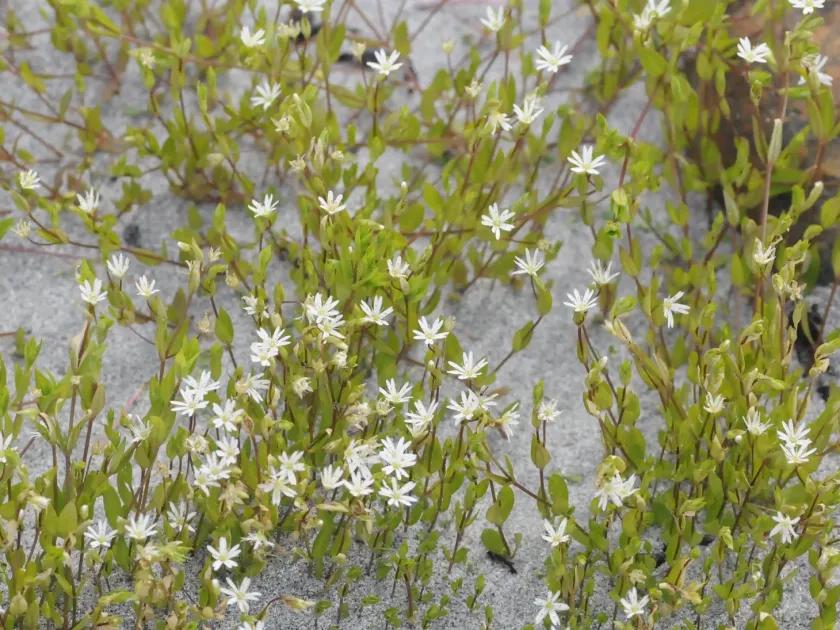
Fleshy stitchwort (Stellaria crassifolia) is a perennial herbaceous plant belonging to the Caryophyllaceae family. The species is characterized by its succulent, somewhat thick leaves, which are a morphological adaptation to its specific environmental conditions.
The native range of this species extends throughout the temperate and arctic regions of the Northern Hemisphere. It thrives in hydro-philous habitats such as riverbanks, marshy meadows, and damp forest clearings, often acting as a bio-indicator for wet soil conditions.
In terms of growth requirements, this plant demands consistently moist or saturated soils. It prefers neutral to slightly acidic soil conditions and full sun exposure, although it displays a notable tolerance for the cooler temperatures found in high-latitude environments.
Agricultural use for Stellaria crassifolia is primarily centered on its role as a component of natural pasture vegetation in wetland ecosystems. It contributes to biomass production in floodplains, providing nutritional value for grazing livestock when part of a mixed meadow composition.
The agronomy of this species focuses on maintaining the hydrological balance of the land. Because the plant is sensitive to habitat disruption, sustainable grazing practices are essential to ensure the longevity of the plant population and the integrity of the soil structure.
Main diseases and pests
Fleshy stitchwort is primarily vulnerable to fungal pathogens that proliferate in high-moisture environments. Leaf spot diseases and rusts are the most common afflictions, often exacerbated by dense canopy growth and prolonged periods of stagnant air near the ground level.
Pest pressures include various leaf-feeding insects and gastropods, such as slugs. These pests are particularly active during wet seasons, where they can severely damage the succulent foliage, creating entry points for secondary bacterial infections that may weaken the entire plant.