
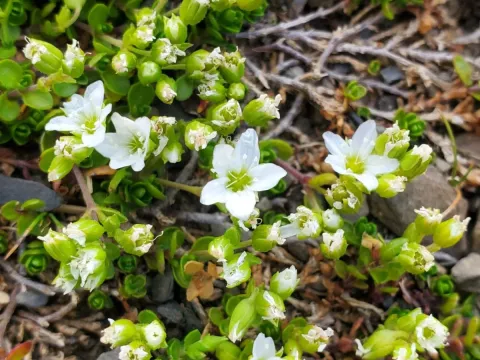
Fringed sandwort
Arenaria ciliata
The Fringed sandwort (Arenaria ciliata) is a perennial herbaceous plant belonging to the Caryophyllaceae family. Naturally occurring in European mountain regions, it is a classic alpine species adapted to harsh, rocky environments and limestone-rich soils.
What the section contains
Fringed sandwort
The plant exhibits a dense, mat-forming growth habit, making it a popular choice for rock gardens and crevice plantings. Its small leaves are characterized by ciliate margins, which give the plant its specific botanical name and distinct texture.
Successful cultivation of this species requires a location with full sun exposure. While it is tolerant of poor, gritty soils, it has very specific requirements regarding moisture: the growing medium must be exceptionally well-draining to prevent root rot.
The species thrives in neutral to slightly alkaline pH environments. It does not tolerate heavy, clay-based soils that hold excessive water, as the species is accustomed to the rapid drainage typical of mountain scree slopes.
In terms of practical use, the Fringed sandwort is primarily utilized in horticultural settings for its aesthetic appeal as a ground cover. It is highly valued by rock garden enthusiasts for its ability to soften the hard edges of stone features while maintaining a tidy, low-profile appearance.
The most significant threat to the health of Arenaria ciliata is waterlogging. Excessive moisture, particularly during the dormant season, often leads to the decline of the root system and the rapid onset of crown rot.
Pests such as aphids and spider mites can occasionaly become a nuisance, especially when the plant is under stress from drought or high temperatures. Regular inspection of the foliage is necessary to detect early signs of infestation.
Fungal diseases, including powdery mildew, can occur if there is insufficient airflow around the plants. Proper spacing and placement in an open, windy site are essential preventative measures against such outbreaks.
Control strategies involve a combination of cultural practices, such as removing debris and weeds around the base, and targeted use of fungicides or insecticides if absolutely necessary. Avoiding overhead watering helps maintain dry foliage, which discourages pathogens.
Integrated pest management should focus on creating conditions that are favorable for the plant but hostile to pathogens. Ensuring a porous soil mix and avoiding organic fertilizers that retain excess water will promote long-term plant vigor.