
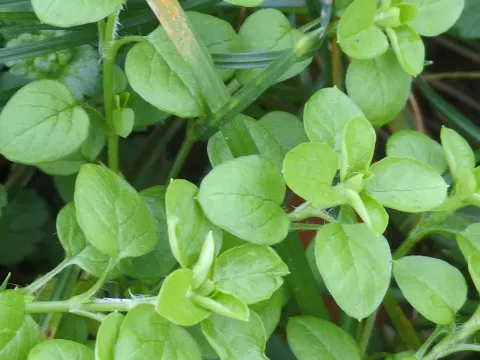
Giant chickweed
Myosoton
Giant chickweed (Myosoton aquaticum) is a perennial herbaceous plant belonging to the Caryophyllaceae family. In agricultural contexts, it is classified as a significant weed that thrives in wet, nitrogen-rich soils.
What the section contains

Giant chickweed
The plant originates from the temperate regions of Eurasia and has become naturalized in parts of North America. It is typically found in moist meadows, irrigation ditches, and damp agricultural fields where moisture is abundant.
Botanically, it is characterized by branched stems that can reach up to 80 cm in length. The leaves are sessile or short-petiolate with a cordate base, and the flowers possess white, deeply bifid petals that make it distinct from common chickweed.
The plant requires high moisture levels and fertile soil to maintain vigorous growth. It is often an indicator of poorly drained soil conditions or excessive irrigation in field crops.
Agrotechnical management involves strict water control and effective drainage systems. Crop rotation with competitive species helps suppress the growth of this weed during the early stages of development.
Diseases such as rust and powdery mildew can infect Giant chickweed, making it a primary reservoir for pathogens that can easily spread to neighboring crops, causing significant agricultural losses.
Insect pests, including aphids and leaf miners, frequently utilize the plant as a host. Its dense growth pattern provides a safe microclimate for these pests to reproduce before migrating to cultivated crops.
Chemical control is effective using systemic herbicides targeted at broad-leaved weeds. Application timing is crucial, preferably before the plant enters its peak flowering phase.
Mechanical control measures include regular cultivation and hoeing. Removing the root system is essential, as the plant can potentially regenerate from stem fragments if conditions remain sufficiently wet.
Integrated weed management programs, combining cultural practices with biological control, are recommended to minimize the impact of Myosoton aquaticum on crop yields and overall farm productivity.