
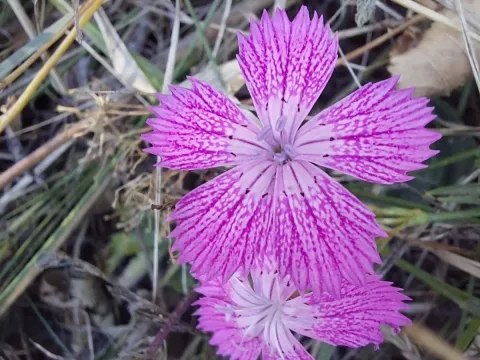
Dianthus collinus
Dianthus collinus
Dianthus collinus seeds are typically sown in early spring, either in protected trays during March or directly into the garden in mid-May.
What the section contains
Dianthus collinus
The seeds require light to germinate, so they should be surface-sown or covered with only a very thin layer of fine vermiculite or soil.
Optimal germination occurs at temperatures between 15°C and 20°C, with seedlings appearing within two to three weeks under consistent moisture.
When starting indoors, seedlings should be hardened off gradually before transplanting into the garden once the danger of frost has passed.
Spacing should be maintained at roughly 20 to 30 cm apart to allow for proper air circulation and to prevent the development of fungal diseases.
As a member of the Caryophyllaceae family, Dianthus collinus thrives in well-drained, nutrient-poor, and often calcareous soils.
This species is highly adapted to sunny, open habitats and requires at least six to eight hours of direct sunlight to maintain a compact growth habit.
The soil should have a neutral to slightly alkaline pH; heavy clay soils must be amended with gravel or sand to improve drainage and aeration.
It exhibits strong drought tolerance once established, making it an excellent candidate for xeriscaping or rock garden environments.
Winter hardiness is a defining feature, as the plant remains dormant and survives low temperatures without requiring additional winter protection.
The agronomic yield of this plant is primarily assessed by its ornamental impact and its ability to cover ground effectively in landscape designs.
In nursery production, well-managed plants can reach marketable size within a single season, producing dense, flowering mats of foliage.
Seed production is consistent if environmental conditions are favorable, with each flower head capable of producing numerous viable seeds for propagation.
Due to its low-growing and hardy nature, the plant is valued for stabilizing soil on gentle slopes while providing year-round visual appeal.
The longevity of the clumps ensures that a single planting can provide sustainable ground coverage for several years with minimal intervention.
Fungal issues, such as Fusarium wilt and root rot, represent the most significant threat to plant health, especially in poorly drained sites.
Rust and leaf spot diseases can occur during humid summers, requiring the use of balanced fungicides and proper spacing to reduce canopy moisture.
Pests like spider mites and aphids may infest the shoots, particularly during dry spells, potentially weakening the plant and reducing blooming.
Effective management strategies include manual removal of infested shoots and the use of targeted biological controls to preserve local pollinator populations.
Sanitation is key to preventing disease transmission; always remove and destroy any plant material showing signs of severe infection or decay.