
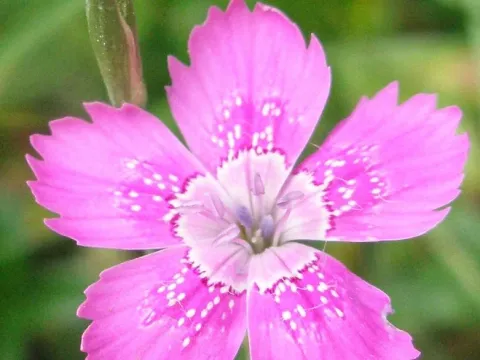
Degen's pink
Dianthus degenii
Dianthus degenii, commonly known as Degen's pink, is a perennial herbaceous plant belonging to the Caryophyllaceae family. It is widely valued in horticulture for its compact habit and suitability for rock gardens and alpine beds.
What the section contains
Degen's pink
The plant originates from mountainous, rocky terrains. Due to its adaptation to harsh alpine conditions, it requires full sunlight and thrives in environments where other common garden species might struggle due to limited nutrient availability.
The primary cultivation requirement is well-drained soil, preferably with a calcareous, neutral to alkaline pH level. Ensuring that water does not accumulate around the crown of the plant is vital for its longevity and health.
In garden settings, it is highly recommended to amend the soil with inorganic materials like grit, gravel, or coarse sand. This mimics the native scree habitats and prevents the roots from becoming waterlogged, which is the most critical risk for this species.
While the plant is hardy and adapted to significant temperature fluctuations, it is sensitive to high humidity and winter dampness. Proper placement in an elevated or sloped position ensures natural drainage, which helps the plant survive throughout the year.
Fungal diseases are the main threat to Dianthus degenii, particularly those triggered by poor ventilation and excess moisture. Root rot and collar rot are common issues if the plant is kept in water-retentive, heavy soils for prolonged periods.
Spider mites can become problematic during hot, dry summer periods. They weaken the plant by feeding on the sap, which often leads to discolored foliage. Early detection and the use of appropriate acaricides can effectively manage these populations.
Aphids occasionally attack the developing buds and soft stems. Since the plant is compact, manual removal or targeted application of insecticidal soaps is often enough to keep the infestation under control without harming the surrounding environment.
To mitigate the risk of disease, gardeners should maintain a proper spacing between plants to allow for airflow. Avoid overhead irrigation, as water droplets on the foliage can create favorable conditions for pathogens to colonize the leaves.
Mulching with a layer of fine gravel is an essential practice for this species. This technique prevents the foliage from touching damp soil, serves as a natural moisture barrier, and keeps the root zone cool while protecting the plant from various soil-borne infections.