
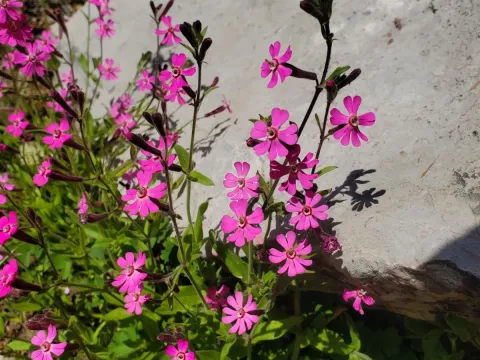
Damask campion
Silene damascena
Silene damascena, commonly known as Damask campion, belongs to the diverse Caryophyllaceae family. This species originates from the semi-arid regions of the Middle East, which determines its high resilience to drought and heat.
What the section contains
Damask campion
The plant thrives in well-drained, sandy or gravelly soils. It is particularly sensitive to stagnant water, which can quickly lead to root rot and other physiological disorders, making soil structure a critical factor for success.
As a sun-loving species, Silene damascena requires full sunlight for optimal growth and flowering. Insufficient light results in elongated, weak stems and a significant reduction in the number of flowers, reducing its ornamental value.
Botanically, it features narrow, lanceolate leaves and typical campion-shaped flowers. The plant usually reaches a height of 20 to 45 cm, maintaining a relatively compact habit, which makes it suitable for border planting.
In terms of practical use, it is a valuable asset in xeriscaping and rock gardens. Its ability to survive with minimal water input makes it an excellent choice for sustainable garden designs in dry, warm climates.
Sowing of Silene damascena is best performed in early to mid-spring, once the soil has warmed up. Direct seeding into the prepared garden beds ensures the best root development and plant health.
Seeds are small and should be sown at a shallow depth of about 0.5 to 1 cm. Lightly covering the seeds with soil or vermiculite helps maintain the necessary moisture levels for germination while allowing adequate light access.
Rows should be spaced approximately 20 cm apart to allow for proper air circulation. Thinning seedlings is essential; a final spacing of 10-15 cm between plants prevents overcrowding and competition for resources.
Starting plants in containers under glass is also an option for early flowering. Transplanting should take place carefully to avoid damaging the taproot system, which is common in many species of the Caryophyllaceae family.
Watering after sowing should be light and consistent until germination is complete. Once the plants are established, they demonstrate significant drought tolerance and require less frequent watering compared to other ornamentals.
Fungal diseases are the primary threat, especially in humid conditions or poorly drained soil. Preventing root decay requires careful monitoring of the water regime and ensuring that the top layer of soil dries out between irrigations.
Powdery mildew may occur on the foliage during periods of high humidity and poor air circulation. Improving spacing between plants and ensuring a sunny, airy location is the best natural defense against this fungal issue.
Aphids are the most common insect pests, typically clustering on the tender new growth and flower buds. Infestations can be managed by using gentle insecticidal soaps or by encouraging natural predators in the garden.
Spider mites might pose a challenge during prolonged dry spells, leading to speckled or chlorotic leaves. Maintaining plant vigor through moderate fertilization and avoiding water stress reduces the plant's susceptibility to such pests.
Integrated pest management, including weeding and keeping the planting area clean of debris, is recommended. Avoid excessive nitrogen fertilizers, as they promote lush, soft growth that is more attractive to both pests and fungal pathogens.