
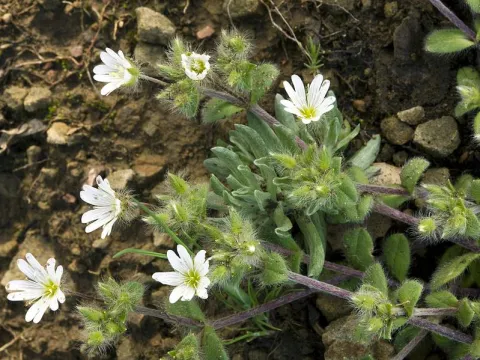
Illyrian mouse-ear
Cerastium illyricum
The Illyrian mouse-ear (Cerastium illyricum) is a member of the Caryophyllaceae family. It is a perennial herbaceous plant native to the rocky habitats and alpine meadows of the Balkan Peninsula.
What the section contains
Illyrian mouse-ear
This species thrives in well-drained, gritty or sandy soils. It is highly adapted to nutrient-poor substrates, making it an excellent candidate for xeriscaping and alpine rock garden designs.
The plant requires full sun exposure to maintain its compact, silvery foliage. Inadequate light results in etiolation, where stems become elongated and weak, compromising the aesthetic value of the plant.
Agricultural practices are relatively simple. Since it is drought-tolerant, watering should be infrequent and restricted to extended dry spells. Overwatering is the most common cause of plant mortality.
In terms of practical utility, the Illyrian mouse-ear is primarily used in landscaping. It serves as an effective ground cover that prevents soil erosion on slopes and adds visual interest through its unique texture.
Root rot is the most critical threat to Cerastium illyricum. It usually occurs when plants are grown in heavy or waterlogged soil, emphasizing the need for proper drainage at the planting site.
Pests such as aphids and spider mites may occasionally infest the plants, particularly during hot and dry weather conditions. Monitoring the underside of leaves can help in early detection.
Chemical control measures should be applied carefully. Using systemic pesticides is recommended only when infestations become severe, as the plant can be sensitive to concentrated chemical applications.
Weed management is essential during the establishment phase. As the plant forms dense mats, it eventually suppresses weed growth, but initial competition must be managed manually or with careful weeding.
Sanitary maintenance involves removing dead or diseased foliage at the end of the season. This practice improves air circulation within the plant mat and significantly reduces the risk of fungal outbreaks.