
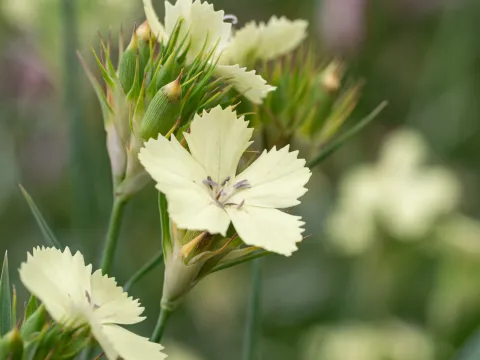
Knapp's pink
Dianthus knappii
The sowing of Knapp's pink seeds is typically carried out in early spring, from March to April, under greenhouse conditions to ensure stable germination.
What the section contains
Knapp's pink
Seeds are sown in a light, sandy medium, ensuring they are only slightly covered with soil, as they require sufficient light for optimal germination.
Temperature control is essential during the early stages, with an ideal range of 18-20 degrees Celsius facilitating robust seedling development.
Pricking out the seedlings into individual pots is a necessary step once the plants have developed two true leaves, allowing for stronger root structure.
Transplanting into the permanent outdoor location should take place after the risk of late spring frost has completely passed.
Knapp's pink belongs to the Caryophyllaceae family and is native to the Balkan region, known for its unique yellow flowers which are rare for this genus.
This species thrives in full sun, requiring at least 6-8 hours of direct sunlight daily to maintain its compact growth habit and bloom intensity.
The soil must be well-draining, ideally with an alkaline to neutral pH, mimicking the rocky, mountainous environment of its natural habitat.
Dianthus knappii is highly drought-tolerant once established, making it an excellent candidate for xeriscaping or rock garden projects.
Over-fertilization should be strictly avoided; a moderate application of low-nitrogen fertilizer during the spring is sufficient for plant health.
Fungal pathogens such as Fusarium wilt and various leaf spots pose the primary risk, especially when air circulation is inadequate.
Root rot occurs if the soil remains waterlogged for extended periods, necessitating the use of raised beds or improved drainage systems in heavy soils.
Pests like spider mites and aphids can become problematic during hot, dry spells, necessitating regular field monitoring for signs of infestations.
Managing the population of these insects involves integrated pest management practices, including the use of targeted biological or chemical control agents.
Proper spacing between plants is critical to allow for air movement, which significantly reduces the incidence of powdery mildew and other foliar diseases.