
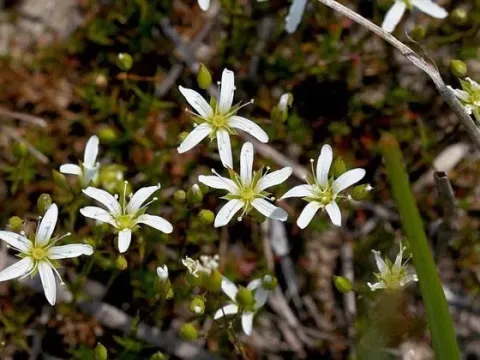
Rock sandwort
Arenaria stricta
Rock sandwort (Arenaria stricta) is a hardy perennial herb that belongs to the Caryophyllaceae family. Known for its delicate appearance, this plant is remarkably well-adapted to environments where nutrient availability is limited and physical conditions are challenging for other species.
What the section contains
Rock sandwort
The geographic distribution of this species spans various temperate zones, showing a preference for rocky, sandy, or gravelly soils. It is frequently found in open meadows or barren areas where light competition is minimal, making it a specialized component of the native ecosystem.
Cultivation requirements necessitate well-drained soil with a low organic matter content, as this plant thrives in environments that mimic its natural stony habitats. It is essential to ensure that the site receives full sun exposure to maintain the plant's health and vigorous growth.
In terms of agricultural management, irrigation should be carefully balanced to prevent root suffocation. The plant's deep root structure is designed to draw moisture from deeper soil layers, allowing it to survive periods of drought that would be detrimental to less specialized crops.
хозяйственном использовании, данная культура ценится не только за ботаническую уникальность, но и за свою роль в предотвращении эрозии почв. Она часто рекомендуется для использования в проектах по восстановлению земель и стабилизации неустойчивых поверхностей.
Major threats to this culture include various root rot pathogens, which often flourish if the soil drainage is inadequate. Fungal diseases such as powdery mildew can also occur if the plants are placed in areas with poor airflow and high ambient humidity levels.
Pests such as aphids and spider mites are common adversaries that feed on the tender foliage of the plant. These infestations, if left untreated, can severely weaken the plant's structural integrity and make it more susceptible to opportunistic secondary infections.
Integrated pest management strategies are highly recommended for the health of the crop. This involves a combination of mechanical weed control and biological pest suppression to minimize the dependency on synthetic chemicals in the field environment.
Monitoring the plant's health regularly is critical during the peak growing season to detect signs of stress early. Providing optimal light conditions naturally strengthens the plant's ability to resist common environmental pests and diseases.
Lastly, nutrient management should be moderate, as over-fertilization can result in lush but soft growth, making the plants more vulnerable to chewing insects. A balanced approach ensures long-term viability and productivity of the perennial stand.