
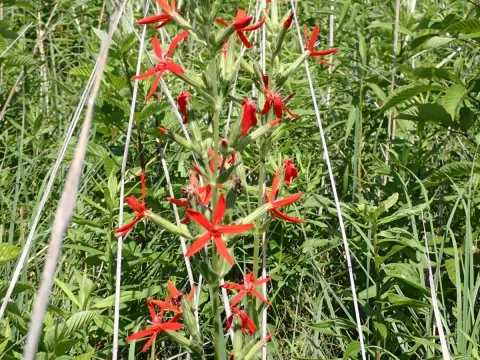
Royal catchfly
Silene regia
Royal catchfly (Silene regia) is a perennial herbaceous plant belonging to the Caryophyllaceae family, native to the prairies of the United States. Propagation is typically achieved through seeds, which require a cold stratification period to break dormancy.
What the section contains
Royal catchfly
Sowing in a nursery or greenhouse setup is recommended for better control, often starting in early spring. Seeds should be surface-sown or covered with a very fine layer of medium, as they require light to germinate.
When sowing in the field, space plants about 45 to 60 centimeters apart to allow for proper airflow and root expansion. The seedlings grow slowly at first, making weed management during the establishment phase critical.
The germination process is generally extended, spanning from several weeks to over a month. Maintaining consistent moisture levels without saturating the soil is essential during this stage of development.
Transplanting container-grown plants into the garden should be done after the risk of frost has passed. Early spring or fall transplanting provides the best conditions for root system establishment.
This species thrives in full sun but can tolerate light afternoon shade in hotter climates. Adequate sunlight is necessary for the plant to produce its signature vibrant red flowers throughout the summer.
The ideal soil is sandy or loamy, well-draining, and rich in organic matter. Despite its prairie origins, it prefers soils that do not remain waterlogged, especially during the dormant winter months.
Royal catchfly is highly adaptable to various climatic zones within its range. It is cold-hardy, but applying a layer of organic mulch around the base of the plant can provide beneficial protection against frost heaving.
Watering should be deep but infrequent to encourage the development of a deep taproot, which helps the plant survive occasional dry spells. Avoid overhead watering to reduce the risk of foliage diseases.
Nutrient requirements are modest; a single application of a balanced, slow-release fertilizer in early spring is usually sufficient to support healthy vegetative growth and subsequent flowering.
Root rot is the most common threat when the plant is grown in heavy or poorly draining soils. Excess moisture creates an environment favorable for fungal pathogens, which can rapidly compromise the taproot.
Foliar diseases such as powdery mildew can occur if the plants are placed too close together or if humidity levels remain consistently high. Proper spacing is the primary cultural control method.
Insects like aphids can congregate on the developing flower buds, draining sap and potentially causing stunted growth. Using insecticidal soaps or neem oil is usually effective for localized infestations.
Nematodes are another potential issue, often evidenced by yellowing leaves and reduced vigor. Removing and destroying affected plants is necessary to prevent the spread of the pathogen to neighboring specimens.
Maintaining a weed-free zone around the base of the plants is essential for reducing the population of pests that might use neighboring weeds as alternative hosts throughout the growing season.