
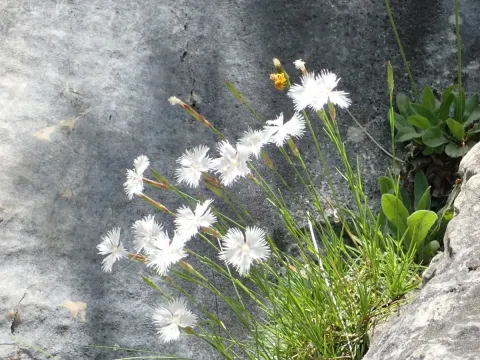
Rock pink
Dianthus petraeus
The rock pink (Dianthus petraeus) belongs to the Caryophyllaceae family. This perennial herb is naturally adapted to the rocky, limestone-rich landscapes of Southeastern Europe, where it thrives in harsh mountain conditions.
What the section contains
Rock pink
The plant requires extremely well-drained, neutral, or alkaline soil. In garden settings, it is essential to incorporate sand or fine gravel into the planting site to ensure that water does not accumulate around the crown of the plant.
As a sun-loving species, Dianthus petraeus must be positioned in full sunlight. Insufficient light exposure will result in leggy, weak growth and a significant reduction in the plant's ability to produce its characteristic fragrant blooms.
The species exhibits remarkable drought tolerance, making it an excellent candidate for xeriscaping or traditional rock gardens where irrigation is minimal and natural rainfall is the primary water source.
Its compact growth habit and silver-green foliage make it a versatile ornamental plant, ideal for filling crevices in rock walls or creating low-maintenance borders that provide structure throughout the year.
Propagation of Dianthus petraeus is typically achieved by sowing seeds in early spring, usually indoors or in a greenhouse, to ensure a controlled environment for germination and early seedling development.
Seeds should be thinly covered with a light, airy substrate and kept at a steady temperature of 18–20 degrees Celsius. Germination usually occurs within a few weeks if the moisture levels are kept consistent but not excessive.
Seedlings should be transplanted to their permanent outdoor location once the danger of frost has passed. Planting density should ensure enough space between individuals to promote airflow and prevent moisture buildup.
Vegetative propagation via cuttings is another reliable method, especially for preserving specific traits. Cuttings taken from non-flowering shoots in mid-summer root effectively in a sandy potting mix when kept in shaded conditions.
Establishing the plants requires minimal maintenance, provided the soil drainage is adequate. Regular monitoring during the first year of growth ensures that the plants are not overwhelmed by competing weeds.
The primary threats to Dianthus petraeus involve fungal issues triggered by excess moisture and humidity. Diseases such as fusarium wilt or root rot are common in poorly drained soils or in gardens with poor air circulation.
Maintaining a clean, open, and well-ventilated planting area is the most effective preventative measure. Avoiding overhead watering is also recommended to keep the foliage dry and reduce the risk of leaf spot pathogens.
Insect pests, including aphids and spider mites, can occasionally become problematic, particularly during prolonged dry spells or heat waves, when the plant's defenses might be stressed by environmental conditions.
In cases of infestation, systemic insecticides or horticultural oils may be used. It is crucial to apply these treatments during the cooler parts of the day to prevent plant damage and protect beneficial pollinating insects.
Ongoing vigilance, including the removal of dead foliage after the blooming season, helps keep the plant vigorous, minimizes hiding spots for pests, and contributes to the overall health of the entire flower bed.