
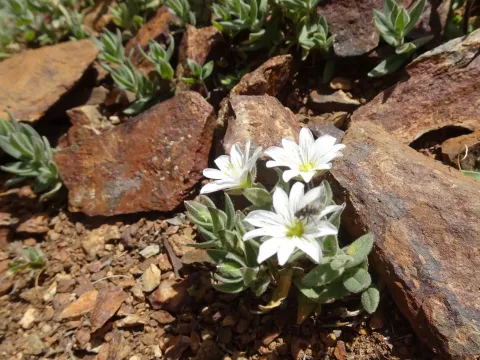
Pyrenean mouse-ear
Cerastium pyrenaicum
Pyrenean mouse-ear (Cerastium pyrenaicum) is a low-growing herbaceous perennial belonging to the Caryophyllaceae family. This species is native to the mountain regions of Europe, specifically the Pyrenees, where it grows on rocky slopes and alpine meadows.
What the section contains
Pyrenean mouse-ear
The plant exhibits high adaptability to the challenging conditions of high altitudes, forming dense mats of silvery-green foliage. The shoots typically reach a height of only 10-15 centimeters, making it an ideal choice for rock gardens and alpine beds.
For successful growth, Pyrenean mouse-ear requires well-drained, sandy, or stony soil with moderate nutrient content. Stagnant moisture in the root zone is detrimental, so creating a quality drainage layer is essential when planting in heavy clay soils.
The crop is sun-loving and drought-tolerant, meaning it should be planted in open, sunny locations. Due to its mountain origins, the plant is capable of withstanding significant temperature fluctuations and cold stress.
The agricultural and horticultural use of Cerastium pyrenaicum is primarily limited to ornamental landscaping. It is frequently utilized as a ground cover plant to stabilize slopes and create natural carpet-like textures in rock gardens.
The main threat to Pyrenean mouse-ear includes fungal diseases that develop under high humidity and poor air circulation. Common issues include root rot and leaf spot pathogens.
Among pests, slugs and snails pose the greatest risk by feeding on the delicate leaves during wet weather conditions. It is highly recommended to monitor moisture levels and prevent overcrowding to maintain plant health.