
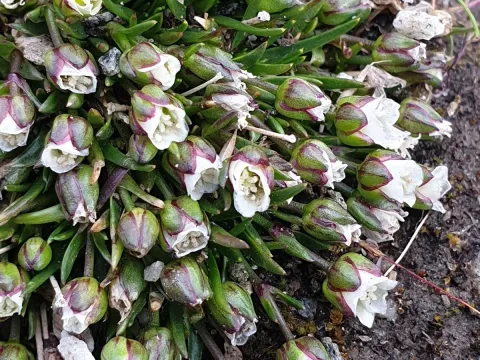
Sagina caespitosa
Sagina caespitosa
Sagina caespitosa, known in the botanical community as a member of the Caryophyllaceae family, is a small, mound-forming perennial herb. It is highly valued in horticulture for its dense, moss-like habit, which creates a perfect, emerald-green carpet in cool-climate gardens.
What the section contains
Sagina caespitosa
Seed propagation is possible but requires stratification to break seed dormancy. Seeds should be sown in early spring on the surface of a light, well-draining potting mix. Since the seeds are minute, they should not be covered deeply; exposure to light is crucial for germination.
For professional nursery production, vegetative division is the most common and efficient method. By dividing mature clumps in the spring, growers can ensure a uniform stock of plants that retain the genetic characteristics of the parent, ensuring consistent quality for end-users.
Proper spacing during planting is essential for rapid ground coverage. A distance of 10 to 15 centimeters between plants is recommended, allowing them to merge into a seamless mat within a single growing season. This dense growth habit helps prevent the encroachment of opportunistic weeds.
When starting from seeds, maintain a temperature of 15 to 20 degrees Celsius. The germination phase typically lasts about two to three weeks. Once the seedlings reach a size of 2-3 centimeters, they can be transplanted into larger containers or permanent locations in the garden.
Sagina caespitosa thrives in cool, moist climates, reflecting its origin as a high-altitude alpine species. It is remarkably winter-hardy and can withstand significant frost, provided that the soil is not overly saturated with water during the freezing process.
Soil requirements focus heavily on drainage. While the plant appreciates moisture, it detests "wet feet." Sandy or gravelly soils with a neutral pH are ideal. Improving soil structure with grit or fine gravel is a common practice to ensure that water percolates away from the root zone quickly.
Regarding light exposure, the plant performs best in full sun to partial shade. In environments with hot summers, light afternoon shade is recommended to prevent the foliage from scorching, although in cooler northern regions, it prefers unrestricted sun exposure to maintain its compact form.
Watering should be consistent but careful. During the establishment phase, the soil must remain slightly damp. Once established, the plant is relatively resilient, but it still requires regular irrigation during prolonged dry spells to keep the cushions looking lush and vibrant.
Fertilization should be approached with caution. Sagina caespitosa does not require rich soil. Over-fertilizing with nitrogen promotes rapid, weak growth that reduces the plant's natural toughness and makes it more susceptible to damage during winter months or under heat stress.
The primary use of Sagina caespitosa is in ornamental landscaping. It is an excellent choice for rockeries, crevice gardens, and as a filler between stepping stones where it creates a soft, permanent, and visually appealing green landscape element.
From an agricultural production standpoint, the "yield" refers to the plant's coverage efficiency. A well-managed tray of Sagina can provide sufficient material to cover several square meters of a prepared garden surface, making it a cost-effective choice for large-scale landscaping.
Unlike traditional grass lawns, this plant requires zero mowing. This significantly reduces maintenance costs and labor, making it an attractive option for modern, low-maintenance garden designs that focus on ecological sustainability and natural aesthetics.
It pairs exceptionally well with other alpine flora such as Dianthus or Saxifraga. These combinations create dynamic landscapes that offer textural variety and color interest throughout the growing season, appealing to both professional designers and hobbyists.
Sagina caespitosa also acts as an effective living mulch. By shading the soil surface with its dense foliage, it helps to conserve soil moisture and suppresses the germination of annual weeds, contributing to a healthier and more balanced garden ecosystem.
The primary threat to the vitality of Sagina caespitosa is fungal disease caused by excess moisture and poor air circulation. Crown rot can develop quickly if water pools around the base of the plant, often leading to the sudden collapse of entire sections of the planting.
Slugs and snails are the most significant invertebrate pests. They are particularly active during damp weather and can consume the tender foliage, leaving unsightly patches in the groundcover. Nematodes in the soil can also cause stunting and poor root development.
Powdery mildew may occur if the planting is too dense or if the plants are placed in a location with stagnant air. This typically presents as a white, dusty coating on the leaves and can be mitigated by ensuring adequate spacing and selecting sites with good wind movement.
Integrated pest management strategies are recommended, including regular monitoring for pest activity and the use of physical barriers or targeted biological controls. Chemical interventions should be used sparingly and only when strictly necessary to preserve the health of the garden environment.
- Ensure sharp drainage at the time of planting.
- Remove dead leaves to improve air circulation.
- Water from below to keep foliage dry.
- Keep the area free from leaf litter and debris.
- Use gravel mulch to separate foliage from soil moisture.