
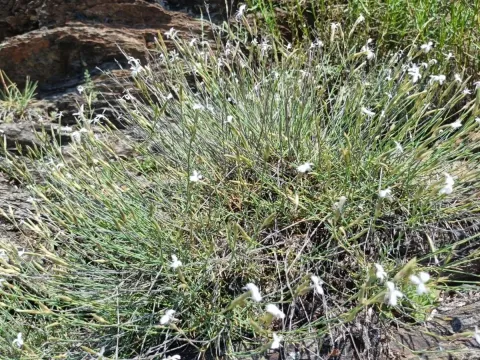
Pyrenean pink
Dianthus pyrenaicus
Pyrenean pink (Dianthus pyrenaicus) is a perennial herbaceous plant belonging to the Caryophyllaceae family. It is native to the Pyrenees mountains, thriving in rocky and alpine environments.
What the section contains
Pyrenean pink
Propagation is primarily carried out via seeds sown in early spring. Using a seed starting tray with a sterilized, well-draining potting mix ensures the best germination rates.
Seeds should be covered lightly with vermiculite or soil and kept at a stable temperature of 18-20°C. Constant moisture is essential until the cotyledons appear, after which the humidity should be reduced.
Hardening off seedlings is a crucial step before transplanting them into the open ground. This process allows the plants to adapt to environmental stressors like wind and temperature fluctuations.
Once established, the plants form dense, low-growing mounds that provide long-lasting color. Sowing density should be managed to ensure adequate space for mature plant growth.
This species requires full sun exposure to maintain its characteristic compact habit. Any degree of shade will lead to poor growth and a significant reduction in flower production.
The soil must be exceptionally well-draining, mimicking the rocky mountain slopes of its native habitat. A mixture of gravel, sand, and poor quality loam is ideal for preventing root rot.
Pyrenean pink prefers slightly alkaline to neutral soil conditions. If the site is acidic, amending with garden lime or crushed limestone is highly recommended for optimal development.
Watering requirements are modest; however, during the peak blooming season, the plants should be checked for hydration. Avoid wetting the foliage, as this can encourage fungal growth.
- Bright, direct sunlight
- Gritty, well-drained substrate
- Moderate soil pH levels
- Good air circulation
Fungal pathogens such as Fusarium wilt pose a serious threat to Dianthus species. These diseases are usually triggered by poor drainage or excessively damp soil conditions.
Rust and leaf spots may appear if the plants are placed in areas with stagnant air. Maintaining proper spacing and removing debris around the base of the plant are vital preventative measures.
Aphids and spider mites are the most common insect pests that attack the tender foliage. These should be managed with insecticidal soaps or targeted horticultural oils.
In humid climates, the plants are particularly vulnerable to botrytis. Ensuring the crown of the plant stays dry, especially during rainy spells, is the best strategy for protection.
Regular monitoring of the foliage and rapid removal of dead or infected stems can significantly reduce the need for chemical intervention in the garden.