
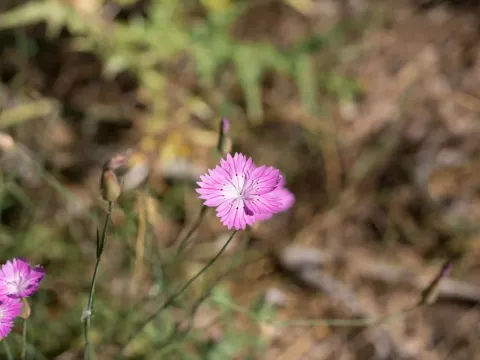
Rigid pink
Dianthus strictus
Rigid pink (Dianthus strictus) belongs to the Caryophyllaceae family. It is a perennial herbaceous plant adapted to harsh, rocky, and well-drained environments.
What the section contains
Rigid pink
The plant is naturally found in habitats where water availability is periodic. It is a drought-tolerant species that requires direct, full sun exposure to thrive.
The ideal soil for this species is a gritty or sandy mix with excellent drainage capabilities. It does not tolerate waterlogging, which often leads to root rot.
It prefers a neutral to slightly alkaline soil reaction. In regions with high humidity, adding coarse sand or gravel to the planting hole is highly recommended.
In terms of usage, Dianthus strictus is primarily an ornamental crop. It is highly sought after for alpine gardens, xeriscaping, and stabilizing slopes due to its dense growth habit.
Sowing in open ground should occur during the spring season when temperatures are consistently above 12 degrees Celsius.
Seeds should be distributed evenly and lightly covered with substrate. They require sunlight for germination and should not be buried too deeply.
For container-grown starts, sow seeds in late winter and maintain a temperature range of 15-20 degrees Celsius for optimal results.
Seedlings should be thinned out to allow for sufficient airflow. Spacing is crucial to prevent moisture buildup within the foliage.
Transplanting should be done carefully to avoid disturbing the root system. Ensure that the soil is firm and adequately watered immediately after planting.
Dianthus strictus is susceptible to various fungal diseases if the moisture levels are not managed correctly. Rust and leaf spots are common issues.
Pests such as aphids and spider mites can attack the plant, especially in stagnant air conditions or during hot, dry summer periods.
To prevent disease, avoid overhead watering. Drip irrigation or watering at the base of the plant is much safer for maintaining the plant's health.
Regular monitoring of the foliage helps in early detection of infestations. Manual removal or biological control agents are preferred over heavy chemical use.
Good cultural practices, including sanitation and removal of dead tissue, are essential to minimize the risk of recurring pest and disease problems.