
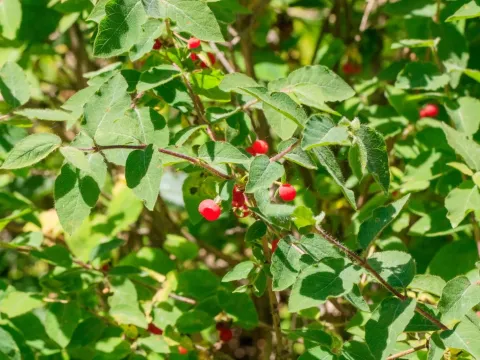
Altmann's Honeysuckle
Lonicera altmannii
Altmann's Honeysuckle (Lonicera altmannii) is a deciduous shrub species belonging to the Caprifoliaceae family. This plant is native to the mountainous regions of Central Asia, specifically thriving in the high-altitude landscapes of the Tian Shan and Dzungarian Alatau mountains.
What the section contains
Altmann's Honeysuckle
Botanically, it is recognized as a hardy, spreading shrub that typically reaches heights of 1 to 2.5 meters. The plant features oval-shaped leaves with fine pubescence and produces subtle, cream-colored flowers that add distinct ornamental value during the spring season.
The culture thrives in well-drained, stony, or calcareous soils, reflecting its natural evolution in alpine environments. It is highly valued in horticulture for its exceptional drought tolerance, making it an excellent candidate for xeriscaping or rocky garden layouts.
Regarding climate, Lonicera altmannii demands full sun exposure to ensure robust growth and consistent flowering. It possesses high frost resistance, which allows it to adapt to diverse temperate climates while maintaining structural integrity during cold winter months.
Agricultural management for this shrub is relatively low-maintenance. Basic requirements include occasional structural pruning to manage shape and size, as well as ensuring that the planting site is free from waterlogging to prevent root decay in non-native soil environments.
Common health issues for this honeysuckle variety include powdery mildew and various leaf spot diseases, typically triggered by high humidity levels and poor air circulation around the crown. Ensuring proper spacing is essential to mitigate these risks.
Pests such as honeysuckle aphids and leaf rollers may occasionally target the young foliage during the growing season. Integrated pest management, including regular inspection and the use of organic insecticidal soaps, is usually sufficient to maintain plant health.