
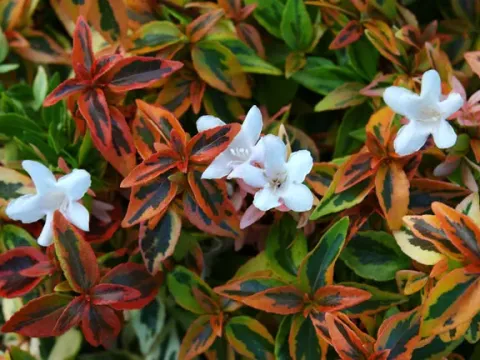
Abelia
Diabelia
Abelia is a genus of deciduous or evergreen shrubs belonging to the Caprifoliaceae family. Originating from Eastern Asia, including China and Japan, as well as parts of Mexico, these plants are highly regarded for their fragrant bell-shaped flowers and attractive foliage that provides seasonal interest in gardens.
What the section contains


Abelia
The climate requirements for Abelia involve a need for mild temperatures and protection from cold, drying winds. While some species are moderately hardy, most varieties thrive in temperate climates where they can benefit from full sun to partial shade, which enhances their flowering potential and overall health.
Soil conditions are critical for Abelia; the plant requires well-drained, fertile soil with a slightly acidic to neutral pH level. Proper drainage is essential to prevent waterlogging, which often leads to root rot and other systemic issues that can quickly weaken the shrub's structure.
Agricultural practices for this culture include consistent watering during the growing season and periodic fertilization. Pruning is a vital aspect of management, as it promotes new growth and maintains the plant's aesthetic form, which is essential for its primary use in ornamental landscaping and garden design.
Economically and aesthetically, Abelia is used extensively in urban landscaping, private estates, and as a hedge component. Because of its versatility, it serves well as a specimen plant or as part of a mixed border, and it is frequently cultivated in containers in regions where the climate is too harsh for outdoor wintering.
Common pests that affect Abelia include aphids, spider mites, and scale insects. These pests often congregate on the undersides of leaves or on succulent new growth, and if left untreated, they can lead to leaf yellowing, distorted growth, and the spread of secondary viral infections.
Fungal diseases, such as powdery mildew, represent a significant threat, especially in humid environments with poor air circulation. Effective management involves maintaining spacing between plants, providing adequate sunlight, and using targeted fungicide applications when environmental conditions favor the rapid spread of fungal spores.