
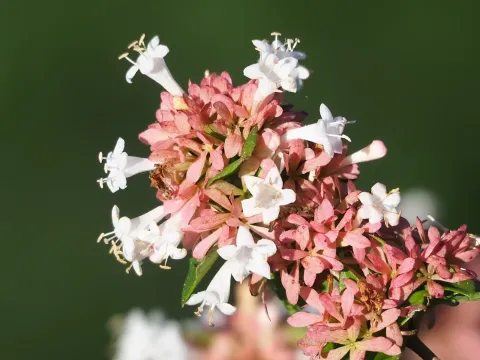
Abelia
Abelia
Abelia is a genus of deciduous and evergreen shrubs belonging to the Caprifoliaceae family. Known for their graceful arching branches and fragrant flowers, these plants are widely utilized in ornamental horticulture and landscaping.
What the section contains
 Abelia corymbosa
Abelia corymbosa
Abelia corymbosa
 Abelia graebneriana
Abelia graebneriana
Abelia graebneriana
 Abelia integrifolia
Abelia integrifolia
Abelia integrifolia
 Abelia ionandra
Abelia ionandra
Abelia ionandra
 Abelia schumannii
Abelia schumannii
Abelia schumannii
 Abelia uniflora
Abelia uniflora
Abelia uniflora
 Abelia zanderi
Abelia zanderi
Abelia zanderi
 Glossy Abelia
Abelia hybrids
Glossy Abelia
Abelia hybrids
 Umbrella abelia
Abelia umbellata
Umbrella abelia
Abelia umbellata
Abelia
The native distribution of the species ranges from East Asia to Mexico. Given their sensitivity to frost, these shrubs thrive in mild climatic zones, often requiring protective measures or indoor cultivation in colder regions.
For successful development, Abelia requires fertile, well-draining soil with a slightly acidic to neutral pH. Incorporating organic matter such as compost or peat improves soil structure and nutrient retention significantly.
Full sunlight is essential for optimal flowering, although light afternoon shade is beneficial in hot climates to prevent leaf scorching. Consistent light exposure ensures the plant maintains its compact form and vibrant foliage color.
Regular irrigation is necessary to keep the soil moist but never waterlogged. During the active growing season, applying a balanced liquid fertilizer every two weeks promotes vigorous growth and enhances the intensity of the blooms.
Abelia can be susceptible to common pests such as aphids and spider mites, particularly in greenhouses or sheltered environments. Early detection and application of appropriate insecticides are crucial for plant health.
Root rot, caused by overwatering and poor drainage, remains the most significant threat to the plant's structural integrity. Ensuring a high-quality drainage layer in pots or well-drained garden beds is essential for prevention.
Powdery mildew may occur when humidity levels fluctuate and air circulation is restricted. Pruning branches to allow better airflow and treating with fungicides helps to mitigate this fungal issue effectively.
Nutrient deficiencies, particularly chlorosis caused by iron or magnesium imbalance, can lead to yellowing leaves. Periodic soil testing and the use of chelated fertilizers effectively rectify these mineral imbalances.
Regular monitoring for scale insects and fungal leaf spots is recommended to maintain the plant's ornamental appeal. Removing damaged foliage immediately helps prevent the spread of disease to healthy stems.