
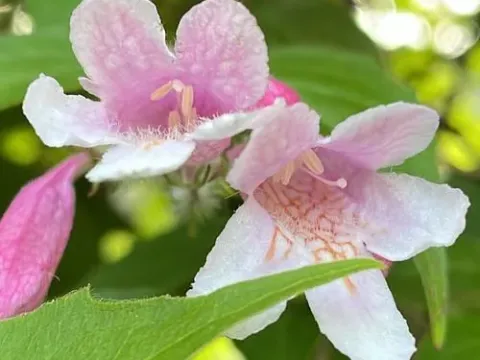
Beauty bush
Kolkwitzia
The Beauty bush (Kolkwitzia) is an ornamental deciduous shrub belonging to the Caprifoliaceae family. Native to the central regions of China, this plant has gained international popularity as a staple for landscape design due to its spectacular spring flowering period.
What the section contains
Beauty bush
It thrives best in full sun, which is essential for developing its characteristic heavy floral display. While it can tolerate partial shade, insufficient light levels will significantly reduce the density of blooms and weaken the overall structure of the shrub.
The ideal soil for this species is well-drained, fertile, and slightly alkaline or neutral. The root system is sensitive to waterlogging, so planting it on elevated sites or incorporating organic matter to improve drainage is a recommended agronomic practice.
Care involves annual pruning, which should be performed immediately after the plant has finished flowering. Removing old or weak wood stimulates vigorous new growth, ensuring that the plant remains healthy and produces abundant blooms in the following season.
In terms of usage, the Beauty bush is a highly valued landscape plant. It is primarily utilized as a specimen plant, in mixed shrub borders, or as a foundation planting where its arching branches and bell-shaped flowers can be showcased effectively.
The plant is relatively resilient but can be affected by fungal diseases, particularly powdery mildew, during humid and stagnant weather conditions. Proper spacing and airflow management within the shrubbery are the most effective preventive measures against these pathogens.
Insect pests such as aphids and spider mites can occasionally inhabit the foliage during hot and dry spells. These pests weaken the plant by feeding on cell sap; therefore, monitoring for signs of infestation and applying appropriate horticultural treatments is advised.