
Black honeysuckle
Lonicera nigra
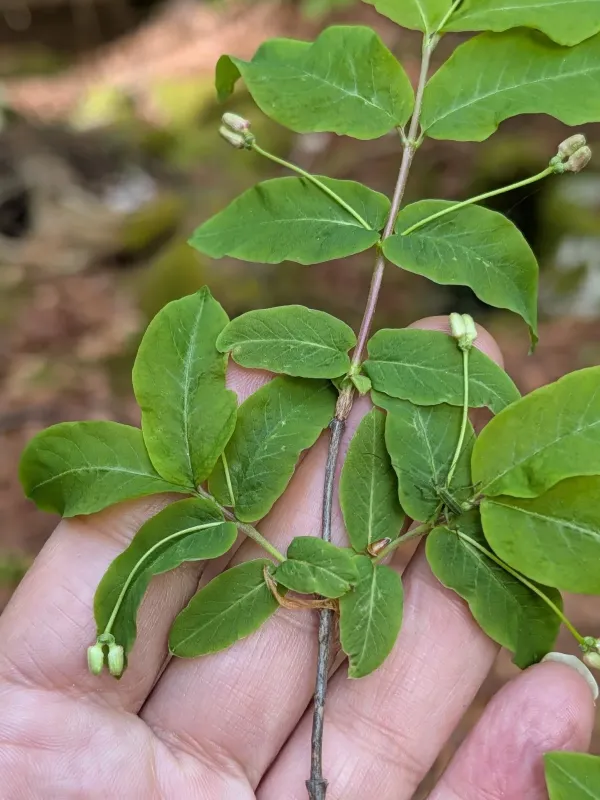
Description
Growing requirements
Black honeysuckle (Lonicera nigra) is a deciduous shrub belonging to the Caprifoliaceae family. Native to the mountainous regions of Central and Southern Europe, it is primarily valued for its ornamental foliage and structure.
The plant grows to a medium height and features dark, glossy berries. It is crucial to note that unlike the popular edible honeysuckle species, Lonicera nigra fruits are inedible and should not be consumed, as they are toxic if ingested.
The species thrives in environments with cool, moist air and well-drained, nutrient-rich soil. It is an excellent choice for woodland gardens or semi-shaded areas where other plants might struggle to receive enough light.
Regarding soil requirements, the plant prefers a slightly acidic to neutral substrate. Adequate organic matter incorporation helps to improve water retention while maintaining the necessary permeability for root health.
Maintenance involves minimal effort if the planting site is correctly chosen. Regular pruning after flowering helps to maintain a compact shape and promotes vigorous growth for the following season.
Main diseases and pests
Lonicera nigra is susceptible to common pests such as aphids, which can cluster on new growth. Early detection and treatment are essential to prevent leaf curling and stunted development.
Fungal diseases like powdery mildew are common in humid conditions with poor air circulation. Ensuring the shrub is not crowded by other plants is a key preventive measure.
Leaf rollers and scale insects may also cause occasional damage. Regular inspection of the foliage during the peak growing season allows for quick intervention using appropriate horticultural oils or soaps.
Environmental stress, particularly prolonged drought, can make the plant more vulnerable to secondary infections. Maintaining consistent soil moisture during summer is recommended.
Good garden hygiene, such as removing fallen debris beneath the shrub, significantly reduces the likelihood of overwintering pathogens affecting the plant in spring.