
Bladder-fruited honeysuckle
Lonicera vesicaria
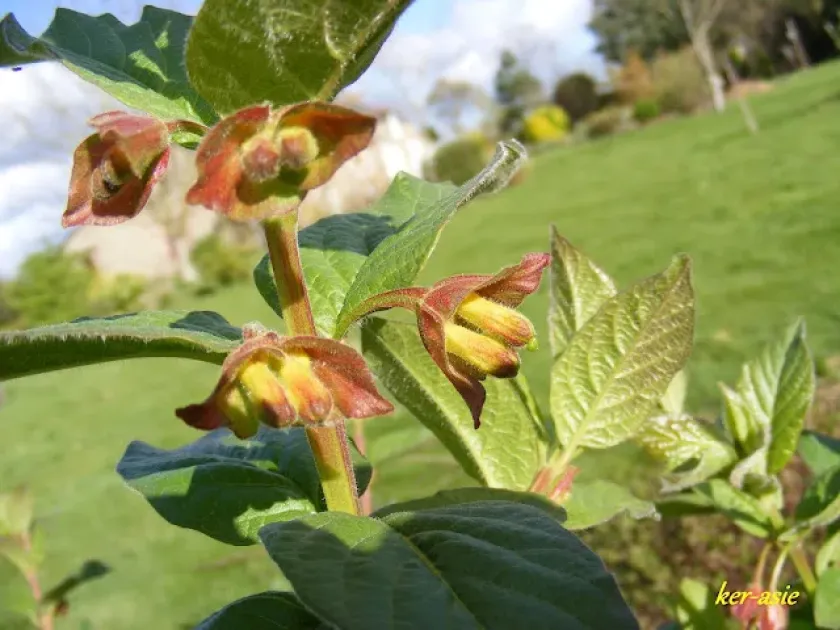
Description
Growing requirements
Lonicera vesicaria, commonly known as bladder-fruited honeysuckle, is a deciduous shrub species belonging to the Caprifoliaceae family. It is native to the mountainous regions of Central Asia, specifically the Pamir-Alai and Tien Shan ranges, where it thrives in rugged, rocky environments.
This shrub is highly adapted to arid conditions and mountainous climates. It prefers well-drained, gritty or stony soils and requires a sunny location to reach its full development potential. Its drought tolerance makes it a suitable candidate for xeriscaping in suitable hardiness zones.
In terms of agricultural and horticultural management, the plant requires minimal intervention once established. It is essential to ensure that the planting site has excellent drainage, as the species is highly susceptible to root rot if subjected to waterlogged soil conditions for extended periods.
Maintenance should focus on light pruning during the dormant season to remove dead wood and encourage a dense growth habit. While it is hardy, young specimens may require some protection from severe frosts during their first few years in a new garden environment.
The primary economic use of Lonicera vesicaria is in the ornamental sector. Its distinct, bladder-like fruit structures provide unique seasonal interest, making it a sought-after species for botanical collections, alpine gardens, and rockeries where specialized shrubs are required.
Main diseases and pests
The main pathological threats to this species include fungal infections such as powdery mildew, especially if the air circulation around the canopy is insufficient. Proper spacing during planting and regular clearing of weeds help mitigate these risks.
Insect pests including aphids and scale insects are known to infest honeysuckle species. Integrated pest management, including the encouragement of natural predators like ladybugs, is the preferred method for maintaining plant health in a sustainable landscape setting.