
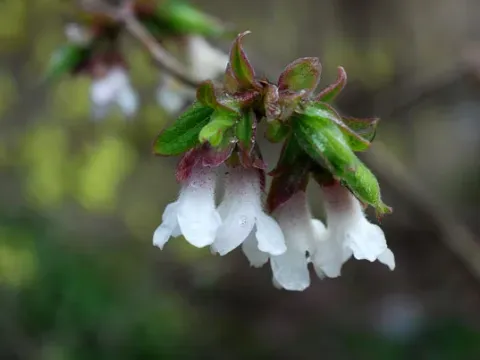
Bristly honeysuckle
Lonicera setifera
Bristly honeysuckle (Lonicera setifera) is a deciduous shrub member of the Caprifoliaceae family. This species originates from the mountainous regions of China, where it primarily inhabits forest edges and rocky slopes with moderate humidity levels.
What the section contains
Bristly honeysuckle
The plant is highly valued for its cold hardiness, making it suitable for regions with harsh winter conditions. It thrives in fertile, well-drained loamy soils with a pH ranging from slightly acidic to neutral to ensure proper nutrient uptake.
Cultural requirements include consistent soil moisture, especially during the fruit-setting phase, although stagnant water must be strictly avoided. Providing full or partial sun exposure is essential for the development of the characteristic dense foliage and healthy stems.
Botanically, the plant is distinguished by stiff, bristle-like hairs covering its young shoots and leaves. The shrub typically grows up to two meters in height and develops a multi-stemmed structure that requires minimal but regular pruning to maintain air circulation.
Agricultural management of the species focuses on annual organic mulching to regulate soil temperature and moisture. Fertilization should be focused on early spring applications to support vigorous growth and floral bud initiation for the next season.
Common phytopathological issues affecting Lonicera setifera include powdery mildew, which can significantly damage leaves if planting density is too high. Effective management involves adequate spacing and pruning to allow sufficient airflow through the canopy.
Insect pests, such as aphids and scale insects, may target the tender growth of the shrub. Implementing integrated pest management strategies, including the use of horticultural oils or beneficial insects, helps maintain the health of the plant throughout the growing season.