
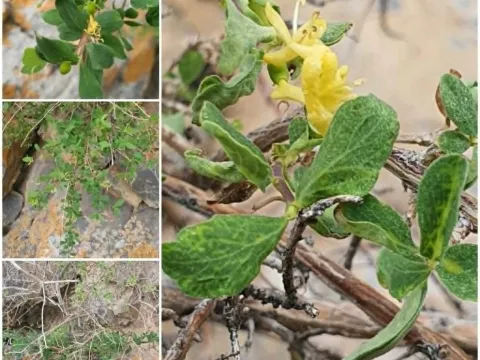
Bristly honeysuckle
Lonicera hispida
Bristly honeysuckle (Lonicera hispida) is a deciduous shrub belonging to the Caprifoliaceae family. It is native to the mountainous regions of Central Asia, where it grows in rocky substrates and high-altitude slopes, demonstrating remarkable adaptation to harsh environmental conditions.
What the section contains
Bristly honeysuckle
The botanical characteristics of this species include glandular hairs covering the stems and leaves, which give the plant its distinctive texture. This honeysuckle is valued for its hardiness and ability to thrive in poor, rocky soils that offer excellent drainage, which is crucial for its root health.
For successful cultivation, the plant requires a location with full sun to partial shade. While it is tolerant of various soil types, it performs best in neutral to slightly acidic, well-draining loamy soil. It is essential to avoid sites where water accumulates, as stagnant moisture can cause root rot.
Agrotechnical maintenance focuses on minimal intervention. Occasional pruning is recommended to remove dead or diseased branches and to maintain the desired shape of the shrub. Fertilization should be light, applied in early spring to encourage steady growth rather than rapid, weak development.
In landscaping, bristly honeysuckle is an excellent choice for rock gardens, hillsides, or as an accent plant in a drought-tolerant garden design. Its slow growth rate makes it ideal for permanent border planting where low-maintenance, hardy species are required.
Like many species in the Lonicera genus, bristly honeysuckle is susceptible to powdery mildew, especially during seasons with high humidity and limited airflow. Proper spacing between plants is the most effective preventative measure against fungal outbreaks.
Pests such as aphids and leaf rollers may occasionally feed on the foliage. While these insects rarely kill the plant, they can significantly affect its aesthetic value if left untreated during the active growing season.
Integrated pest management, including the use of horticultural oils or insecticidal soaps, is recommended when pest populations reach damaging levels. It is important to target the underside of leaves to ensure effective contact with the pests.
Sanitation practices, such as removing fallen leaves and pruning off infected branches, are vital for reducing the overwintering population of pathogens. Keeping the base of the shrub clean helps prevent early spring re-infection.
Maintaining a healthy, stress-free plant is the best defense against threats. Providing adequate irrigation during prolonged dry spells and ensuring the plant has enough space to grow will keep it resilient against most common garden diseases.