
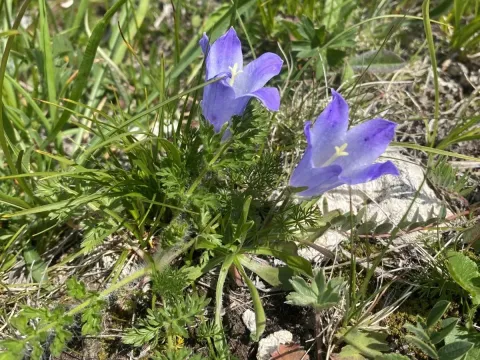
Campanula tridentata
Campanula tridentata
Campanula tridentata is a compact perennial plant belonging to the Campanulaceae family. It is native to the alpine regions of the Caucasus, Turkey, and Iran, where it thrives in harsh mountain climates.
What the section contains
Campanula tridentata
The plant requires well-drained, gritty, and mineral-rich soils to simulate its natural habitat. It performs poorly in heavy clay or waterlogged ground, which can lead to rapid root decay.
Optimal growth is achieved in full sun or light afternoon shade. Given its high-altitude origin, it is adapted to high light intensity, which helps maintain the plant's characteristic low-growing habit.
In terms of climate, it is exceptionally hardy and drought-tolerant once established. It does not require frequent irrigation, as it is physiologically adapted to withstand seasonal moisture deficits.
This species is widely used in landscaping for rock gardens, crevice plantings, and alpine troughs. Its attractive, large violet-blue flowers make it a highly sought-after plant for specialized collectors.
Fungal pathogens, particularly crown rot, are the primary threat to Campanula tridentata. This is usually triggered by inadequate drainage or high humidity during the winter dormancy period.
Slugs and snails present a significant risk, especially during the spring growth phase. They consume fresh leaves, which can severely weaken the plant and reduce its flowering potential.
Aphids can occasionally infest the flower stalks, causing distortion of the blooms. Regular monitoring and manual removal or insecticidal soap are recommended for small-scale cultivation.
Proper ventilation is essential for indoor or protected cultivation to prevent the buildup of fungal spores. Removing dead foliage after the blooming season helps maintain plant health.
Integrated pest management involves selecting resistant cultivars where possible and ensuring that the planting site has optimal air circulation to minimize humidity-related stressors.