
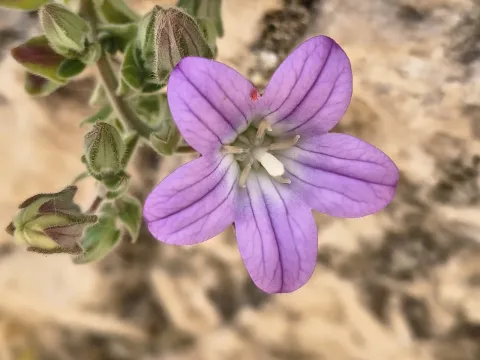
Soft bellflower
Campanula mollis
The soft bellflower (Campanula mollis) is a member of the Campanulaceae family. This perennial plant is native to the rocky, mountainous regions of the Mediterranean, where it thrives in exposed, calcareous habitats.
What the section contains
Soft bellflower
Botanically, it is distinguished by its soft, pubescent foliage that gives the plant a velvety texture. It develops small, tidy rosettes, producing elegant, bell-shaped flowers in shades of blue and violet that are highly attractive in a landscape.
To cultivate this species successfully, one must provide well-draining, slightly alkaline soil. The plant is extremely intolerant of "wet feet" during the winter months, which makes high-quality drainage essential for long-term health.
The soft bellflower prefers bright, sunny locations but appreciates light afternoon shade in hotter climates. It is best suited for rock gardens, crevice plantings, or containers where its moisture levels can be carefully monitored and managed.
Horticulturally, it is prized for its ornamental value. Its compact growth habit and long blooming period make it a favorite for alpine troughs and Mediterranean-style garden designs, providing texture and color in tight spaces.
The most common threat to Campanula mollis is root rot, typically caused by excessive soil moisture or poor drainage. Ensuring the substrate remains porous is the primary preventative strategy for any grower.
Slugs and snails are the primary pests, often consuming the soft, pubescent leaves during damp weather. Using copper tape or iron phosphate-based baits is recommended to keep these gastropods away from the foliage.
Aphids may occasionally attack the developing flower buds, stunting growth and affecting the aesthetic quality. A gentle wash with an insecticidal soap or neem oil is usually sufficient to control small outbreaks.
Powdery mildew can occur in stagnant, humid environments. Ensuring proper spacing between plants to allow for airflow is the most effective way to prevent fungal infections from taking hold.
Regular maintenance, including the removal of spent flower stems and debris, helps to prevent fungal buildup. A healthy, well-aerated plant is naturally more resistant to standard garden pathogens.