
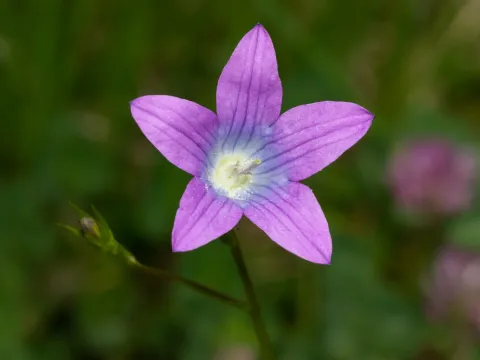
Spreading bellflower
Campanula patula
The spreading bellflower is typically a biennial herb that begins its life cycle by forming a basal rosette of leaves during the initial growing season.
What the section contains
Spreading bellflower
Sowing should be performed using very small seeds, which require proper surface preparation to ensure they maintain contact with the soil while remaining exposed to light.
Optimal sowing times occur in late summer or autumn, allowing the seeds to undergo a natural period of dormancy and stratification before spring germination.
The seedbed must be finely tilled and free of large debris, as the minute seeds of this species will fail to establish if buried too deeply in the soil.
For uniform distribution, mixing the seeds with inert material like fine sand is a standard practice that helps prevent overcrowding and improves overall stand density.
As a member of the Campanulaceae family, this plant prefers open, sunny locations or semi-shaded areas with consistent moisture levels.
It thrives best in loamy or sandy soils that provide adequate drainage while still retaining enough water to support the plant during the flowering stage.
Soil pH levels should be near neutral or slightly acidic, as these conditions favor the development of the root system and nutrient uptake from the soil.
Adequate soil fertility is beneficial, although the species demonstrates significant adaptability to various environments, including meadows and forest edges.
Monitoring soil moisture is essential; while the plant is resilient, prolonged drought or waterlogging can lead to stunted growth or increased susceptibility to disease.
The spreading bellflower contributes to the biodiversity and nutritional quality of natural pastures and hayfields, serving as a valuable component of forage.
Its role as a nectar source makes it a crucial plant for pollinators, which indirectly supports the productivity of surrounding agricultural land.
The yield of biomass is dependent on site conditions, plant density, and the presence of competing weeds that may shade out the bellflowers.
While not a primary monoculture crop, its integration into seed mixtures for wild meadows enhances the ecological value and sustainability of the site.
Proper management of hay harvest cycles ensures that the plant remains a stable part of the local vegetation without being depleted by overgrazing.
Powdery mildew represents a primary fungal threat to the plant, particularly in regions with high humidity and limited air circulation around the foliage.
Root rot, induced by excess soil moisture or poor drainage, can cause rapid decline and eventual death of the biennial plants during their active growth phase.
Slugs and snails are the most prominent pests, capable of destroying young seedlings and basal rosettes during moist spring weather conditions.
Aphids can infest the stems and developing flower buds, draining sap and hindering reproductive success by preventing the formation of healthy seeds.
Integrated pest management, including regular scouting and maintaining clean surroundings, is the most effective approach to protecting the crop.
Seed harvesting should take place once the seed capsules have turned brown, indicating that the seeds have reached their mature, viable stage.
When harvesting for forage, the optimal window is during full bloom, as this is when the plant's nutritional concentration is at its peak.
Post-harvest drying must be conducted in well-ventilated areas to prevent molding and ensure the preservation of structural integrity of the plant biomass.
Allowing some plants to remain on the field after maturation facilitates natural self-seeding, which is vital for maintaining populations in extensive systems.
Seeds should be cleaned through winnowing and stored in cool, dry conditions to maintain high germination rates for future planting seasons.