
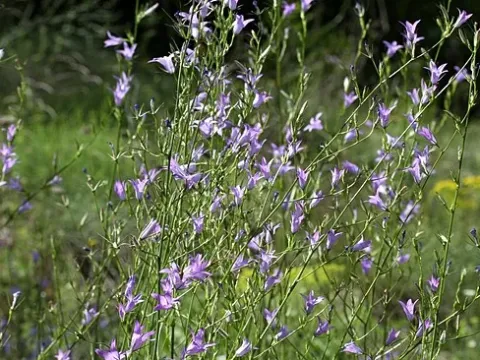
Spreading bellflower
Campanula sparsa
Spreading bellflower (Campanula sparsa) is a herbaceous perennial plant belonging to the Campanulaceae family. It is recognized for its delicate, branching stems and small, vibrant violet-blue bell-shaped flowers.
What the section contains
Spreading bellflower
The plant originates from the Balkan Peninsula, where it typically inhabits subalpine meadows and open woodland clearings. It is well-adapted to cool, temperate climates with moderate rainfall throughout the growing season.
Successful cultivation requires well-drained, light soil with a neutral to slightly acidic pH level. The plant is particularly sensitive to waterlogged conditions, which can cause root rot during the dormant winter period.
This species thrives in full sun or light partial shade, provided it has good air circulation. Sheltered positions are preferred to protect the thin stems from being flattened by strong winds during the flowering season.
In terms of agricultural and horticultural use, Campanula sparsa is primarily valued as an ornamental species. It is widely used in rock gardens, borders, and naturalistic landscape designs due to its elegant, meadow-like appearance.
Sowing should be performed in autumn to allow for natural stratification or in early spring once the threat of severe frost has passed and the soil begins to warm up.
The seeds are very fine, so they should be sown on the surface of the soil. Press them gently into the growing medium without covering them deeply, as light is beneficial for their germination process.
Consistent soil moisture is crucial during the germination phase; however, overwatering must be avoided to prevent the development of damping-off disease in the seedlings.
For uniform growth, thinning is recommended once the first true leaves have developed, maintaining an spacing of 15 to 20 centimeters to allow proper air circulation around each plant.
Using a seed tray or a protected nursery bed can significantly improve success rates by providing a stable environment and easier weed control during the seedling stage.
The most significant threats to Campanula sparsa are fungal diseases, which are exacerbated by poor drainage and humid conditions that restrict airflow within the canopy.
Powdery mildew is a common concern that appears as a grayish-white coating on leaves, requiring prompt intervention with systemic fungicides to prevent further spread.
Slugs and snails are the most common pests, particularly in wet seasons, as they find the tender, succulent foliage of young bellflowers highly attractive.
Aphids can also pose a problem by clustering on the developing flower buds, which can stunt the growth of the inflorescences and reduce the aesthetic value of the plant.
Maintenance practices such as keeping the garden free of debris and ensuring proper soil aeration are essential for preventing these threats and maintaining plant health.