
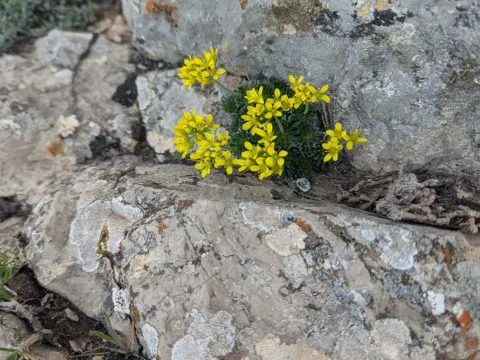
Spanish whitlow-grass
Draba hispanica
Spanish whitlow-grass (Draba hispanica) is a perennial herbaceous plant belonging to the Brassicaceae family. It is natively adapted to rocky alpine environments and is widely appreciated in gardening for its cushion-forming growth habit.
What the section contains
Spanish whitlow-grass
Propagation is typically done through seeds sown in early spring or late autumn. The seeds require a well-draining, gritty soil mix to germinate effectively without the risk of rotting.
Stratification is recommended for seeds to ensure a uniform emergence, mimicking the natural cold cycles experienced in their native Spanish mountain habitats.
Seedlings should be kept in a cool, bright environment. Once true leaves develop, they can be transplanted into permanent rock garden sites with full exposure to sunlight.
Vegetative propagation via cuttings or division of mature cushions is also possible and is best performed shortly after the flowering season has concluded.
The primary requirement for successful cultivation is excellent drainage. This plant is highly intolerant of wet feet and will quickly succumb to root decay if kept in soggy conditions.
Full sun is essential for the plant to thrive. In shaded areas, the cushions lose their compactness, and flower production is significantly hindered, affecting the plant's ornamental appeal.
The soil should be sandy or gravelly, mimicking the stony slopes of its natural habitat. A neutral to slightly alkaline pH is generally preferred for optimal growth performance.
Temperature tolerance is high in terms of cold, but the plant requires protection from excessive humidity and waterlogged soil during mild, wet winters to prevent dampening off.
Fertilization should be kept to a minimum. Over-fertilization, especially with high-nitrogen compounds, encourages soft, leggy growth that is prone to pests and diseases.
The most common health issues involve fungal infections like root rot and leaf spot, which are almost exclusively caused by excessive moisture levels in the soil or air.
Crucifer flea beetles are the most frequent insect pests. They can cause damage to the succulent leaves, particularly during the early spring growth phase.
Aphids can occasionally colonize the flower stalks. Regular inspection and the use of targeted treatments are necessary to prevent infestations from spreading through the colony.
Prevention is key, and ensuring good air circulation around the plants is the best defense against both pests and common fungal pathogens.
Removing dead leaves or organic debris from the center of the cushion helps maintain plant health and reduces the risk of sheltering pests or fungal spores.
Spanish whitlow-grass is primarily used for ornamental purposes, specifically in rock gardens, scree beds, and alpine troughs where its compact form is highly valued.
Seed harvesting should be timed carefully as the pods ripen. Since the seeds are small and dispersed easily, bagging the seed heads is a common practice.
Maintenance during the season is limited to ensuring the plant stays free of encroaching weeds that might compete for sunlight or retain excessive humidity.
After blooming, pruning spent flower stalks is beneficial for the plant's energy allocation and aesthetic appearance, as it keeps the cushion looking tidy.
Proper winterization involves ensuring the crown of the plant is not buried in debris, allowing it to remain dry and well-ventilated throughout the dormant season.