
Isatis platyloba
Isatis platyloba
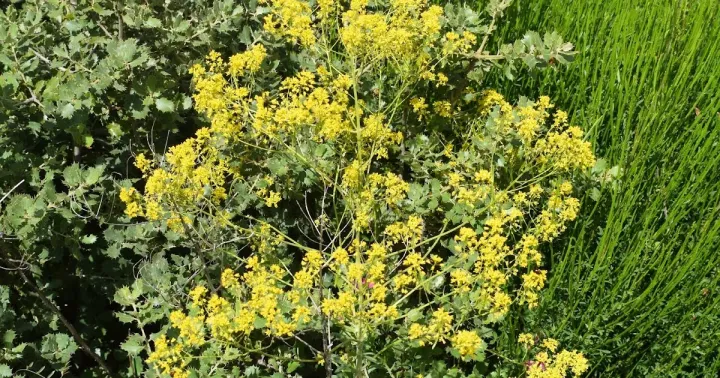
Description
Sowing dates
Isatis platyloba belongs to the Brassicaceae family and is an herbaceous plant that requires specific environmental conditions for successful germination and growth.
Sowing is typically carried out in early spring when the soil temperature reaches a stable level, ensuring that the seeds have enough moisture for rapid emergence.
The seeds should be planted at a shallow depth of approximately 1 to 2 centimeters to provide the necessary contact with soil particles for optimal water absorption.
Row spacing is usually set between 30 and 45 centimeters, which allows for mechanical weeding and ensures that the plants have enough space to develop their root systems.
The crop establishes a strong rosette during its first year, which helps it gain a competitive advantage over weeds in the early stages of the growing season.
Growing requirements
This plant thrives in well-drained, sandy loam or loamy soils with a neutral pH, as it is highly sensitive to waterlogging which can lead to root degradation.
High levels of solar radiation are essential for the development of Isatis platyloba, and it should be cultivated in open areas to maximize photosynthesis and biomass production.
The crop demonstrates significant drought tolerance once established, attributed to its deep taproot, making it suitable for regions with variable rainfall patterns.
Temperature resilience is a key feature, as the plant can withstand freezing temperatures, allowing for stable performance even in temperate climates.
Standard fertilization practices including balanced nitrogen, phosphorus, and potassium application contribute to healthy growth without promoting excessive vegetative leaf production at the expense of yield.
Main diseases and pests
Cruciferous flea beetles are the most significant pest, often causing damage to young seedlings and requiring early intervention to protect the crop's development.
Fungal diseases such as downy mildew can become a problem under conditions of high humidity, necessitating proper air circulation and spacing within the fields.
Weevil species can also impact the reproductive phase of the plant by feeding on flowers and developing seeds, which significantly reduces the final harvest potential.
Integrated pest management strategies are recommended, focusing on crop rotation and the use of targeted biological controls to maintain ecological balance.
Regular field scouting is essential to identify early signs of pathogen infestation or insect damage, enabling timely and efficient application of control measures.