
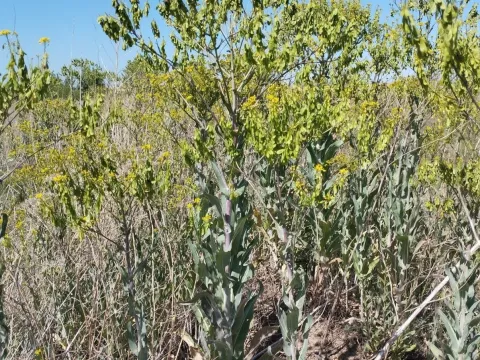
Isatis costata
Isatis costata
Isatis costata is a biennial herbaceous plant belonging to the Brassicaceae family. During the first year, it develops a rosette of leaves, while in the second year, it produces a flowering stem for seed production.
What the section contains
Isatis costata
Sowing should be performed early in the spring as soon as the soil warms up to at least 5–7 degrees Celsius. The recommended seeding method is row planting with inter-row spacing of 30 to 45 cm.
Seeds should be planted at a depth of 2–3 cm. Given favorable moisture conditions, the seedlings typically emerge within two weeks, establishing themselves quickly in the soil.
The seeding rate is usually between 8 and 12 kg per hectare, depending on seed quality. Avoiding over-crowding is crucial to ensure that each plant has sufficient access to nutrients and light.
This crop is known for its cold hardiness, allowing it to withstand early spring frost, which makes it a viable option for regions with unpredictable climate conditions.
The plant thrives best in well-drained loamy or sandy soils with a neutral or slightly alkaline pH. Waterlogging should be strictly avoided as it can cause root rot and significantly reduce yield.
Isatis costata is a sun-loving species. High light intensity is essential for the accumulation of active compounds and oils within the plant, making open-field cultivation the optimal choice.
Fertilization is a key component of successful cultivation. Nitrogen inputs help develop the vegetative mass during the first phase, while phosphorus and potassium are vital for seed development in the second year.
Crop rotation is mandatory to maintain soil health. It is not recommended to plant Isatis after other Brassica species to prevent the buildup of soil-borne pathogens and common pests.
Inter-row cultivation is necessary to suppress weeds and break the soil crust, allowing better aeration and water infiltration, which are critical for the plant's healthy development.
Isatis costata is primarily grown for its seeds, which are a valuable source of vegetable oils used in various industrial applications. Its economic potential relies on efficient seed harvest management.
The yield depends heavily on the climatic conditions during the blooming period and the presence of pollinators, which help increase the number of developed seeds per pod.
Besides oil production, the vegetative parts of the plant can be utilized for organic soil enrichment, contributing to sustainable farming practices and improved soil structure.
As a nectar-producing plant, it is also beneficial for local bee populations, making it an attractive crop for integrated agricultural landscapes that support biodiversity.
Modern breeding efforts are focused on enhancing the oil content and uniformity of ripening, which will further improve the market viability of this promising crop.
The most common pests for Isatis costata are flea beetles, which can destroy seedlings within a few days of emergence. Early monitoring and protective measures are highly recommended.
Cabbage moths and various aphid species can also cause significant damage by feeding on foliage, thus weakening the plant's overall growth potential and seed output.
Fungal diseases like downy mildew thrive in humid conditions. Maintaining adequate space between plants and ensuring good air circulation is essential for disease prevention.
Clubroot is another severe threat that persists in the soil. Strict adherence to crop rotation intervals of at least 4–5 years is the best preventative strategy for this pathogen.
Integrated pest management (IPM) should be employed, utilizing a combination of resistant varieties, proper field hygiene, and timely application of agricultural chemicals when necessary.
Seed harvesting occurs in the second year of the plant's lifecycle once the pods have matured and dried. Timing is critical to prevent shattering, as the pods can open easily when over-ripe.
Direct combining is the standard method for large-scale production. Modern harvesters with precise settings are used to collect the small seeds efficiently while minimizing field losses.
Post-harvest cleaning is mandatory to remove debris, as moisture trapped in organic matter can lead to spoilage and a reduction in the quality of the stored oilseed crop.
Drying the seeds in well-ventilated areas to a moisture content of approximately 14% ensures long-term stability and preserves the chemical integrity of the oils.
The use of advanced harvesting technology and strict adherence to moisture standards are essential for maximizing the market value and quality of the final agricultural product.