
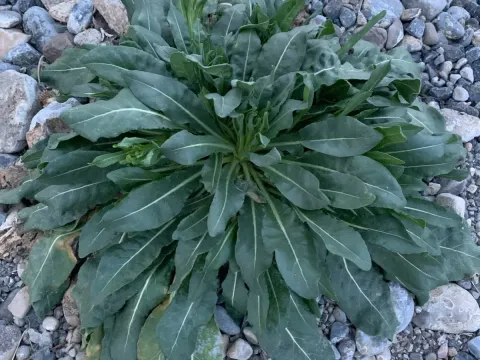
Isatis praecox
Isatis praecox
Isatis praecox is a biennial herbaceous plant belonging to the Brassicaceae family, recognized for its importance in traditional dye production and potential industrial applications.
What the section contains
Isatis praecox
The sowing process is typically carried out in early spring as soon as the soil reaches a temperature of +5 to +8 degrees Celsius, which is optimal for germination.
Row cropping is the standard practice, with row spacings ranging from 30 to 45 centimeters to ensure each plant receives adequate nutrients and space for development.
Seeds are sown at a depth of 1.5 to 2 centimeters, followed by soil compaction to establish optimal contact between the seeds and the substrate for efficient moisture uptake.
In regions with mild winters, autumn sowing can be implemented to ensure early emergence in the following spring, promoting a strong vegetative establishment.
This crop thrives in well-lit areas, as sufficient sun exposure is vital for the development of its large leaf rosette and the synthesis of active compounds.
Ideal soil types for Isatis praecox include fertile loamy or sandy soils with a neutral to slightly alkaline pH, which promote healthy root penetration.
The plant exhibits notable drought tolerance, making it suitable for regions with moderate water scarcity, provided that the soil structure is not excessively compacted.
Optimal vegetative growth occurs within a temperature range of +18 to +25 degrees Celsius, although the plant displays resilience to cooler climatic conditions.
Proper drainage is essential; waterlogged or heavy clay soils that retain excess moisture can inhibit growth and increase the risk of root-related diseases.
The yield of vegetative biomass during the first year depends significantly on soil fertility and the timing of agronomic interventions such as fertilization.
Under intensive management systems, the yield of fresh leaf mass can range from 15 to 25 metric tons per hectare, depending on local climatic variations.
Seed production occurs in the second year, with yields typically ranging from 0.5 to 1.2 metric tons per hectare under standardized cultivation practices.
Regular maintenance and control of competitive weeds are primary factors in maximizing the overall output per unit area of the cultivated land.
Yield stability is supported by crop rotation, where Isatis praecox acts as a beneficial rotational crop due to its deep taproot system that improves soil texture.
Cruciferous flea beetles are the most frequent pests, posing a significant threat to young seedlings and capable of causing severe damage during the early growth stage.
Fungal diseases, including powdery mildew and downy mildew, often appear during periods of high humidity, necessitating preventative management strategies.
Pollen beetles can be problematic during the second year, targeting developing flower buds and potentially reducing the final seed yield of the crop.
Integrated pest management, including regular field monitoring and the judicious use of pesticides, is essential for maintaining a healthy and productive crop stand.
Cultural control practices, such as rigorous weed control and the removal of alternative host plants of the Brassicaceae family, help reduce the incidence of pests.
Harvesting of the vegetative mass is conducted when the leaf rosette reaches its peak development, ensuring high concentrations of desirable plant compounds.
Post-harvest logistics must be efficient to prevent degradation of the biomass; quick transport to processing facilities is necessary to maintain raw material quality.
Seed harvesting is performed in the second year when the pods show characteristic browning, signaling that the seeds have reached physiological maturity.
Mechanical harvesting using combines should be calibrated carefully to prevent seed damage, as the seeds are sensitive to high impact during the threshing process.
After the harvest, remaining crop residues should be incorporated back into the soil as organic amendment, contributing to the long-term fertility of the site.