
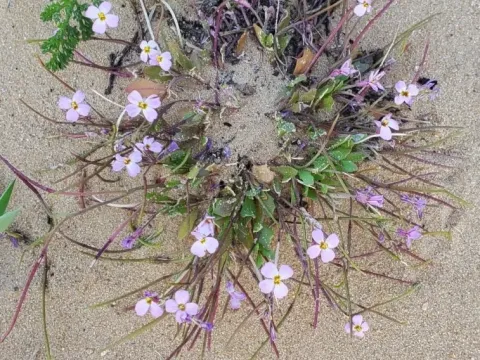
Maresia pulchella
Maresia pulchella
Maresia pulchella is a botanical species belonging to the Brassicaceae family. This annual herb is well-adapted to environments where early spring moisture is abundant, allowing it to complete its life cycle before the onset of summer heat.
What the section contains
Maresia pulchella
Sowing should be scheduled as soon as the soil reaches a workable condition in early spring. The seeds are small and should be planted at a shallow depth of approximately 1 to 2 centimeters to ensure uniform germination and prevent early exhaustion of the seedling.
Optimal germination occurs at temperatures between 10 and 15 degrees Celsius. Precise sowing depth is essential, as planting too deeply often prevents the small seedlings from emerging through the soil crust successfully.
During the initial growth stages, the crop develops quickly. It is crucial to manage plant density effectively to prevent excessive shading, which can inhibit photosynthetic activity and reduce the overall vigor of the crop.
Crop rotation protocols should strictly avoid planting Maresia pulchella after other cruciferous crops. This strategy is vital to prevent the buildup of soil-borne pathogens specifically targeting the Brassicaceae family.
Maresia pulchella thrives in light, well-drained soils, specifically sandy loams or loamy sands. It is highly sensitive to waterlogging, which often leads to root rot and diminished plant health if the site selection is not managed correctly.
As a light-loving plant, it requires full sun exposure throughout the vegetative stage. Reduced sunlight directly correlates with lower biomass production and potential failure in seed development, making site selection critical.
Climatic requirements are tied to the Mediterranean pattern, favoring mild, moist spring conditions. Excessive heat during the flowering phase can truncate the growth period and reduce overall yield potential significantly.
Soil pH levels should be maintained in the neutral range, ideally between 6.0 and 7.5. Soils that are too acidic should be amended with lime to ensure optimal nutrient uptake and proper biological development.
Nutrient management focuses on balanced fertilization. While nitrogen is important for foliage development, excessive amounts can lead to succulent growth that is more susceptible to environmental stress and pest attacks.
Common diseases affecting this crop include downy mildew and various forms of root decay. Maintaining proper soil moisture and ensuring adequate airflow between plants are the primary preventive measures against fungal infections.
Crucifer flea beetles are the most significant insect pests, particularly during the seedling phase. Rapid monitoring and the timely application of approved insecticides are necessary to prevent severe defoliation and plant loss.
Aphids can pose a threat during warmer, drier intervals, colonizing stems and tender leaves. Effective control involves early detection and the use of targeted biological or chemical treatments to manage population spikes.
In humid conditions, slugs and snails may become an issue, damaging the leaves of the plant. Maintaining clear field borders and utilizing appropriate molluscicides are standard practices for managing these pests.
Implementing an integrated pest management (IPM) approach ensures that the crop remains healthy while minimizing the environmental impact of chemical control measures.